
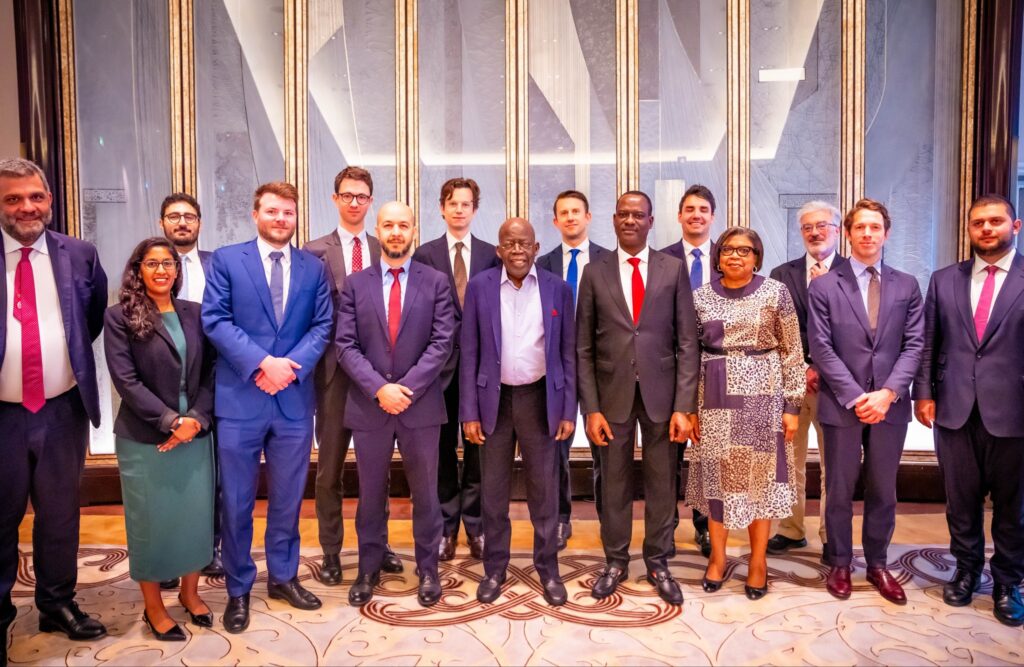
President Bola Ahmed Tinubu met with a delegation of global investors during his state visit to France, the presidential office announced on Tuesday.
In a statement released by spokesperson Bayo Onanuga, the president affirmed that his administration remains focused on converting recent economic reforms into tangible benefits for Nigerians. Tinubu highlighted a suite of policy measures aimed at removing market distortions and stabilising macro‑economic indicators, which he said lay the groundwork for “sustained, inclusive growth.” He also reiterated commitments to deepen reforms across the oil sector, improve transparency along the entire value chain and advance a multi‑pronged security strategy that includes police decentralisation and the disruption of terrorist financing.
“The focus remains on policy stability and diligent execution to ensure these strategic shifts translate into concrete benefits for all Nigerians,” Tinubu remarked after the investors’ round‑table.
Finance Minister and Coordinating Minister of the Economy, Mr. Taiwo Oyedele, used the occasion to cite Nigeria’s strong performance in 2025, reporting an 11.2 percent increase in gross domestic product measured in U.S. dollars. He framed the growth figure as evidence of the country’s trajectory toward the $1 trillion economy target set for 2030.
The Director General of the Debt Management Office, Mrs. Patience Oniha, addressed investor concerns regarding Nigeria’s external borrowing. She assured participants that the government follows a responsible debt‑financing approach and is committed to sustainable debt management practices.
According to DAILY POST, the investors present represented a mix of institutional financiers, including Citibank, France’s Amundi (led by Valerie Baudson), BlueCrest, Ninety One (based in the United Kingdom and South Africa), Kirkoswald Capital, Principal Finisterre, and two U.S. firms – Prudential Global Investment Management (PGIM) and Mesarete Capital.
The meeting underscores Nigeria’s ongoing effort to attract foreign capital as it seeks to diversify its economy and reinforce fiscal stability. By engaging directly with major asset managers and investment houses, the Tinubu administration signals its willingness to provide clearer policy signals and a conducive investment climate. Continued dialogue with the international finance community is expected to shape forthcoming initiatives on infrastructure, energy, and debt restructuring as Nigeria pursues its long‑term development agenda.

Comments are closed for this story.