
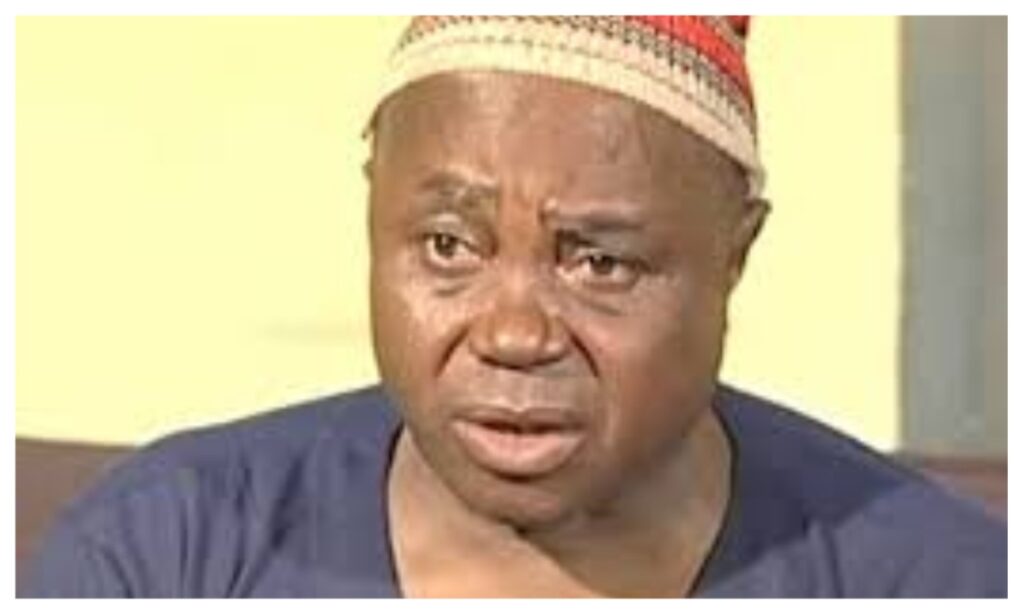
Veteran Nollywood actor Roy De Nani detailed a series of personal and professional setbacks during a recent appearance on the “Where Is the Lie” podcast, highlighting issues of industry exclusion and family tragedy.
De Nani claimed that, at an undefined point in his career, an unnamed individual issued a directive that effectively barred him from future acting work. He recounted instances where, even after he had begun filming, producers abruptly halted productions on his behalf. “A man gave an order that nobody should give Roy De Nani a job again. For years, even when I was already recording, a producer would come in and say, ‘No, cancel it. Stop,’” he said.
The actor also spoke about the loss of his half‑brother, noting that no fellow Nollywood actors or actresses attended the funeral. “I have a brother from the same father. When he died, not a single actor or actress showed up,” De Nani affirmed.
His personal hardships escalated with the deaths of his son and daughter, both diagnosed with sickle‑cell disease and dependent on regular blood transfusions. De Nani explained that the family could not afford the necessary blood, resulting in the children’s deaths. “I lost my son, I lost my daughter because they needed blood transfusion so they could continue living, but there was no money to buy the blood, and they died,” he said.
Regarding industry support, De Nani emphasized that Nollywood did not intervene. “Nollywood never came to assist me. Not that they don’t care, but they have not been touched. Let it be said that way,” he added.
De Nani’s statements raise broader concerns about the welfare mechanisms available to actors facing health crises and the potential for informal blacklisting within the Nigerian film sector. While the claim of an “unofficial blacklist” lacks corroborating evidence, it underscores the need for transparent hiring practices and support structures for industry members.
The revelations arrive at a time when Nollywood continues to expand its global footprint, prompting calls from stakeholders for clearer policies on actor welfare and anti‑discrimination measures. Further investigation into De Nani’s allegations could inform future reforms aimed at safeguarding the professional and personal wellbeing of performers in the Nigerian entertainment industry.



Comments are closed for this story.