
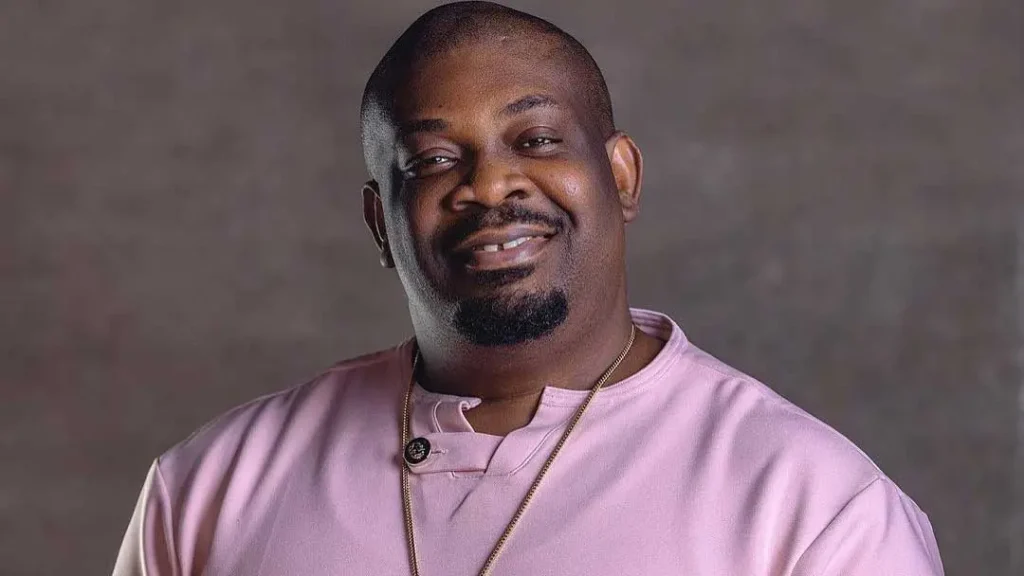
Nigerian music mogul Michael Collins Ajereh, widely known as Don Jazzy, has dismissed allegations that his label, Mavin Records, shows favoritism towards certain artists in terms of promotion and opportunities. During a recent episode of the Crea8torium podcast, the veteran producer addressed the growing speculation among fans and industry insiders regarding this issue.
Don Jazzy argued that the idea of a record label investing in an artist only to neglect them in favor of another “doesn’t make sense.” He emphasized that the level of activity and output from each artist determines the label’s support, rather than any internal hierarchy. He explained, “If an artist only releases one or two songs a year, that’s their decision.” In contrast, he noted, “If an artist has a catalogue of a million tracks and wants to put them out, we can make that happen.”
Linking the controversy to psychological factors, Don Jazzy pointed out that many artists at Mavin experience imposter syndrome and tend to overthink their situations. He acknowledged that artists sometimes panic and over-analyze their circumstances, which can contribute to the perception of being neglected. According to him, there is no intentional strategy to prioritize one act over another; instead, the label’s investments are driven by commercial merit and the artists’ readiness to release new material.
Allegations of bias have circulated on social media for several months, with some fans accusing Mavin of giving disproportionate attention to marquee names like Tiwa Savage and Rema while sidelining others. Don Jazzy rejected these accusations outright, likening the claim to “carrying money and just throwing it away, then locking it somewhere else.” He affirmed that Mavin’s business model is centered on “investing in people to make us and themselves money,” and any perceived neglect reflects an artist’s personal output rather than the label’s policy.
Industry observers note that this debate highlights a broader issue within African music markets: the balance between nurturing emerging talent and capitalizing on established stars. Labels often face pressure to allocate resources where returns are most certain, yet they risk alienating artists who feel underserved. Don Jazzy’s remarks underscore the challenges of managing a diverse roster in a fast-moving digital landscape.
While the producer’s statements aim to quell the controversy, the conversation is likely to continue as fans and artists monitor Mavin’s release schedule and promotional campaigns. Whether the label’s approach will evolve to address concerns about equitable exposure remains to be seen. However, Don Jazzy’s defense signals a firm stance that any perceived favoritism is unintentional and rooted in individual artistic choices.
!['Don't ever argue with me' - Davido scolds Israel DMW for resisting his order [VIDEO]](https://mediatalkafrica.com/wp-content/uploads/2026/08/Davido-Rebukes-Israel-DMW-for-Defying-Order-on-London-Tour-768x461.jpg)