New York City Mayor Zohran Mamdani cemented his growing influence on June 23 by winning all three Democratic congressional primaries where he made endorsements, defeating more mainstream liberal candidates. The 34-year-old democratic socialist’s picks went head-to-head with House Minority Leader Hakeem Jeffries, also of New York, in what many see as a major early test of a new faction within the national party.
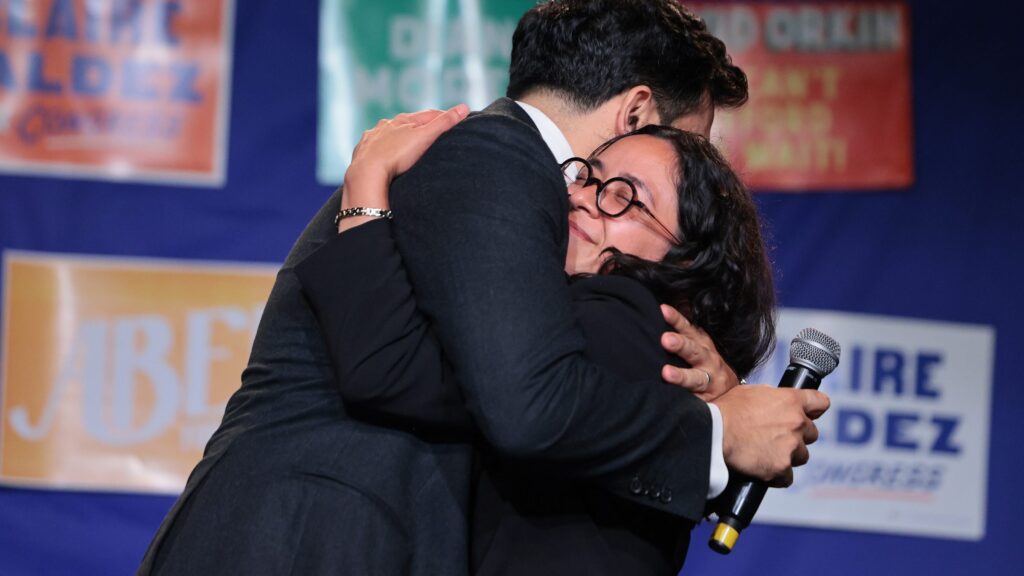
“The old politics that got us into this crisis is not the politics that’s going to get us out of this crisis,” Mamdani declared at Claire Valdez’s victory party. The primaries, including races to replace longtime incumbents like New York’s Jerry Nadler and Maryland’s Steny Hoyer, highlighted a generational shift in the party, with the Kennedy family’s influence fading.
These contests served as intramural referendums in liberal districts on how to tackle the affordability crisis, billionaire interests, and President Donald Trump’s administration. Trump also dominated South Carolina’s gubernatorial runoff, where he avoided an embarrassing loss by endorsing both his preferred candidate and her opponent at the last minute.
Mamdani’s slate—Brad Lander, Darializa Avila Chevalier, and Claire Valdez—all advocated for abolishing U.S. Immigration and Customs Enforcement and labeled Israel’s actions in Gaza a genocide. Lander, a former New York City comptroller who doesn’t identify as a democratic socialist, secured the first win, defeating Rep. Dan Goldman, a former prosecutor who led one of Trump’s impeachment trials. Goldman faced criticism for accepting support from the American Israel Public Affairs Committee, or AIPAC, which has become a divisive issue in Democratic primaries. Preliminary results showed Lander winning by a 2-to-1 margin in a district covering lower Manhattan and parts of Brooklyn.
“It is time for the Democratic Party to walk away from dark money—from PACs funded by crypto, Wall Street, AI and AIPAC,” Lander said in his victory speech. “People can see through this. They have seen through it for a long time.”
Valdez, a first-term assemblywoman, defeated Brooklyn Borough President Antonio Reynoso in a district covering trendy, gentrifying areas once working-class and Latino in northwestern Brooklyn and Queens. The seat is open due to retiring Rep. Nydia Velazquez, who backed Reynoso along with many local officials. Both candidates agreed on most issues, but Valdez argued Reynoso wasn’t outspoken enough.
The most striking victory came from Avila Chevalier, a doctoral student and community organizer, who beat Rep. Adriano Espaillat, D-New York, head of the Congressional Hispanic Caucus, by about four percentage points in a district covering northern Manhattan and part of the Bronx. She survived attacks over past social media posts calling for abolishing police and prisons, labeling veterans “war criminals,” and former President Joe Biden a “rapist,” for which she later apologized.
“The same billionaires that attacked Zohran Mamdani are now spending millions against me,” Avila Chevalier said in a campaign ad. “They know that unlike Adriano Espaillat, I can’t be bought and I won’t back down to Trump.” Both Valdez and Avila Chevalier are members of the Democratic Socialists of America.
When Mamdani won the New York City mayor’s race last November, Republicans signaled democratic socialism’s rising influence would be a key attack line in 2026. Jeffries backed the incumbents and downplayed the proxy war, telling reporters on Capitol Hill he doesn’t believe he’s on “opposite pages” with Mamdani. “There are 215 members of the House Democratic caucus, a handful of primaries that go in one direction or the other in a given state or two aren’t going to reshape who we are,” Jeffries said. But left-leaning figures like influencer Hasan Piker taunted Jeffries in a profanity-laced video from Valdez’s victory party.
Democratic socialism is gaining traction in urban primaries nationwide. Janeese Lewis George, a self-described democratic socialist, won the mayoral primary in Washington, D.C., earlier in June.
Trump avoided backing a loser in South Carolina’s Republican gubernatorial runoff by endorsing both contenders. After originally supporting Lt. Gov. Pamela Evette ahead of the June 9 primary, he also endorsed Attorney General Alan Wilson on June 19. “Both have had amazing careers, and have been with me from the beginning,” Trump posted. Wilson, a National Guard veteran and son of Rep. Joe Wilson, R-S.C., won less than an hour after polls closed. He’ll face Democratic state Rep. Jermaine Johnson in a general election expected to favor the GOP. The dual endorsement puzzled voters, as polls showed Wilson ahead. After Trump-endorsed gubernatorial candidates lost in Iowa and Georgia, he hedged his bets.
Amid the national redistricting war, a court-ordered map in Utah created a deep blue congressional seat. Four Democrats competed in the new compact district anchored by Salt Lake City, with divisions between ideological wings. Former Rep. Ben McAdams finished first, beating state Sen. Nate Blouin, endorsed by Sen. Bernie Sanders, and Liban Mohamed, a former TikTok and Meta policy analyst supported by 51% of delegates at the Utah Democratic convention. McAdams, the last Democrat Utah sent to Congress, won by less than 700 votes in 2018, but his more conservative stance—he once described himself as anti-abortion—became a campaign flashpoint. The seat is rated solidly Democratic, and McAdams will face Republican Riley Owen in November.
The contest to replace Nadler, who led Trump’s impeachment trial, featured quirky personalities, including Jack Schlossberg, the grandson of slain President John F. Kennedy. His lineage drew attention and scorn for the 33-year-old first-time candidate, whose sometimes outlandish social media presence generated buzz. But it wasn’t enough to propel him into Congress, as results showed him losing decisively to state Assemblyman Micah Lasher. Speaking to supporters, Schlossberg evoked his grandfather’s most famous speech before pumping his fist and exiting the stage. “All of us ask not what our country can do, but what we can do to help our city,” he said.