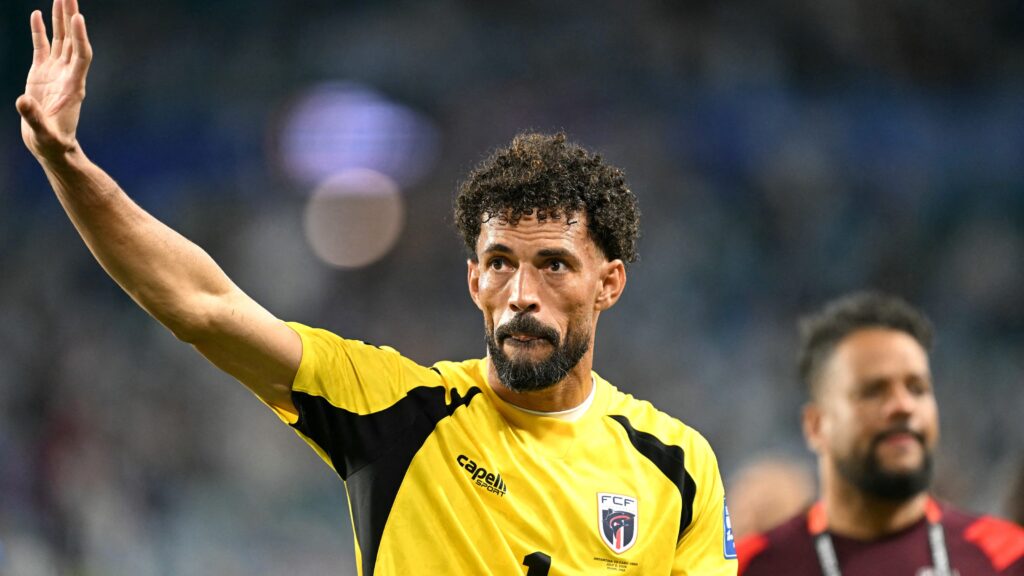
MIAMI — They arrived as an unknown. They depart as the world’s darlings.
Cape Verde’s World Cup journey ended in a heartbreaking 3-2 extra-time loss to Argentina in the round of 32, but the tiny island nation left an indelible mark on the tournament. Goalkeeper Vozinha, already a sensation after seven saves against Spain, outdid himself with eight stops against the defending champions. Sidny Lopes Cabral scored a goal so sublime it could have been struck by Lionel Messi himself.
The Blue Sharks played four matches, three against former World Cup winners. At the end of regulation in every game, they were level. For a nation of just over 500,000 people, it was enough to capture the world’s attention.
“One of the most satisfying outcomes of this World Cup is that nobody has to ask where Cape Verde is anymore,” said center back Roberto “Pico” Lopes after the match. “They know where we are on the map. They know our team.”
Sports fans have short memories, and Cape Verde’s next global appearance may require a refresher. But their brave performance against Argentina signals a bright future. Lopes admits he doesn’t “really like moral victories,” but even he couldn’t deny the achievement of trading blows with the Albiceleste, who finally broke through on a Cristian Romero header that deflected off Diney Borges in extra time.
“It’s been an incredible journey. When we qualified, we wanted to prove we belong here,” Lopes said. “Our performances in the group stage and tonight show we can compete with the best.”
Maybe it shouldn’t have been a surprise. Cape Verde lost just once in 10 World Cup qualifiers. Yet, even those who watched them top a group including Cameroon and Angola likely thought the draw was too steep. Instead, they held Spain scoreless, rallied to draw Uruguay, played out a stalemate with Saudi Arabia, and then faced the reigning champions. Vozinha, who said before the tournament that facing Messi would be a dream, conceded once but saved two second-half free kicks from the Argentine star.
The 40-year-old goalkeeper is leaving his Portuguese second-division club this summer, likely for a team seeking genuine quality, not a publicity stunt.
“It means so much. Being here, competing, playing, fighting — it makes us very proud,” Vozinha said. “We’re sad, but we made it to the knockout round against the world champion. Every player and staff member worked fantastically. Now it’s time to think about the future, but we’re proud of what we achieved.”
Cape Verde’s future is uncertain. Eleven players are 30 or older, and the youngest, Cabral, is 23. The hope is that diaspora players with Cape Verdean ancestry will be inspired to join the national team, and that young islanders will dream of wearing the Blue Sharks jersey.
“I think all Cape Verdeans around the world who aspire to be footballers have seen the way today,” Lopes said. “I hope the new generation has taken in the stars we have out there and wants to be on that stage.”
Whether Cape Verde becomes a fleeting upset story or a lasting fixture depends on that development. But tonight, even in defeat, the name of their country is on everyone’s lips, lifted high by Lopes, Cabral, Vozinha, and the rest of the Blue Sharks.