
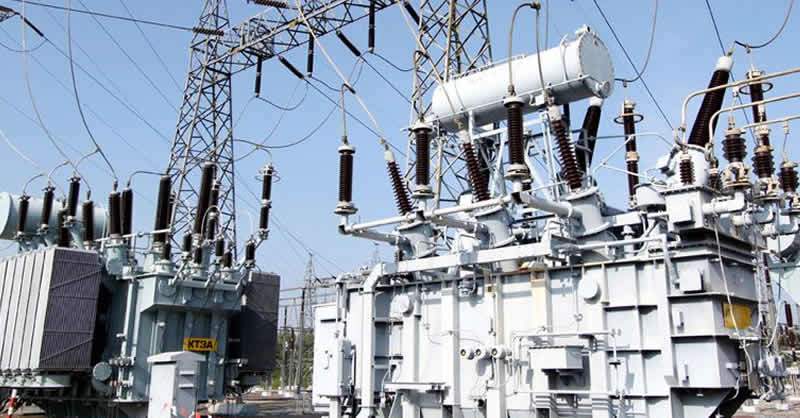
Recent reports reveal that Nigeria’s struggling power industry is in dire need of an estimated N2 trillion ($2.5 billion) injection of capital to attract new investors and rejuvenate the sector. The current state of the industry has severely hindered its ability to meet the electricity demands of its 200 million inhabitants.
Olu Verheijen, an adviser to President Bola Tinubu on energy, highlighted that Nigerian power companies are burdened by excessive debt and insufficient capital, impeding their capacity to expand electricity distribution to households. The country currently generates and supplies only 3,500MW to 4,500MW of power to its vast populace spread across 36 states and the Federal Capital Territory. To put this in perspective, the city of Lagos, with a population of 25 million, receives a mere 1,000MW, while a city like Shanghai, with a comparable population, supplies over 30,000MW during peak demand.
Verheijen emphasized the urgent need for policy reforms to facilitate the restructuring and recapitalization of the sector, urging the entry of new partners with fresh capital. President Bola Tinubu affirmed the administration’s commitment on January 1, 2024, to enhance electricity provision in Nigeria.
The planned recapitalization efforts are set to coincide with initiatives to align electricity tariffs with actual costs, thereby bolstering the financial viability of the power sector. Notably, despite the privatization of generation and distribution in 2013, electricity tariffs are still regulated by the government-controlled Nigeria Electricity Regulatory Commission. This has resulted in power firms being unable to charge rates that cover the distribution expenses, with the government bridging the gap through subsidies.
It’s evident that without a review of tariffs, the devaluation of the naira and rising inflation could escalate energy subsidies from N600 billion in 2023 to N1.6 trillion in 2024, as projected by the regulator.
As Nigeria grapples with these persistent challenges in the power sector, the urgent call for substantial capital infusion and policy reforms becomes increasingly imperative to navigate through the complexities and revitalize electricity provision for its populace.



Comments are closed for this story.