
EU Imposes Tariff on China-Made Electric Cars, Beijing Objects
The European Commission has announced plans to impose an additional 9% tariff on China-made electric vehicles (EVs), a move that has drawn objections from Beijing. The tariffs are lower than those faced by Chinese companies, unless Beijing compromises in a trade row.
Brussels last month imposed hefty provisional tariffs on EVs imported from China, citing an anti-subsidy probe that found them to be unfairly undermining European rivals. The tariffs, which have been in place since July, will now become definitive, pending input from interested parties by the end of August and approval by EU member states by the end of October.
China’s commerce ministry has expressed its strong opposition to the tariffs, calling for Brussels to work with Beijing to avoid escalation of trade tensions. The EU commission official, however, emphasized that it remained open to resolving the trade dispute without tariffs, but it was up to China to present alternatives.
The tariff rates vary for different Chinese manufacturers. Major players like BYD and Geely will face rates of 17% and 19.3% respectively, while SAIC will be charged 36.3%. Chinese companies that cooperated with Brussels’ probe will face a tariff of 21.3%, while those that did not will be subject to the maximum 36.3% duty.
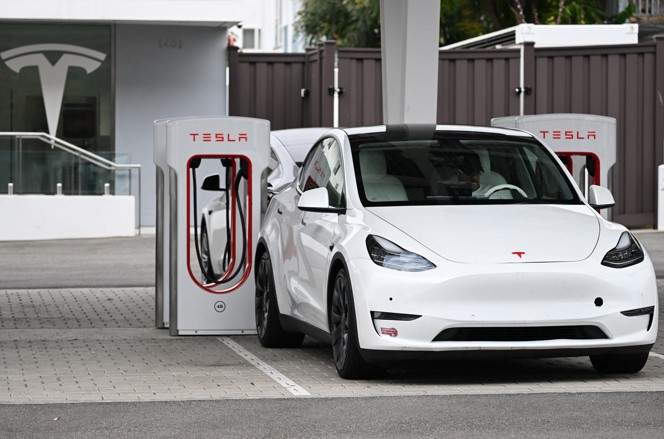
Tesla, the US-based electric carmaker, will face a 9% tariff on its China-made electric cars, which are manufactured under a partnership with a local Chinese company. The commission deemed that Tesla received lower Chinese subsidies than domestic manufacturers.
The EU has taken a balanced approach, granting European manufacturers involved in joint ventures that export EVs from China the same tariff rate as their Chinese partner. European firms like Volkswagen and BMW are affected by this decision.
The Chinese Chamber of Commerce to the EU (CCCEU) has criticized the EU commission’s “protectionist approach” and “unfair use of trade tools,” which it believes will worsen trade tensions.
The European Union and China have a long history of trade disputes, spanning issues such as trade, technology, and national security. The EU has launched probes into Chinese subsidies for solar panels, wind turbines, and trains, while Beijing has begun investigations into imported European brandy and pork.
China’s emergence as an EV powerhouse is attributed to its targeted industrial strategy, which involves significant state funding and research and development. This strategy has given Chinese companies a critical edge in the global EV market, overshadowing leading European automakers.
China’s sales of EVs abroad increased by 70% in 2023, reaching $34.1 billion, with nearly 40% of these sales going to the European Union. As the EU seeks to defend its crucial auto industry and pivot towards green growth, it must navigate this complex landscape carefully to avoid a showdown with China.



Comments are closed for this story.