
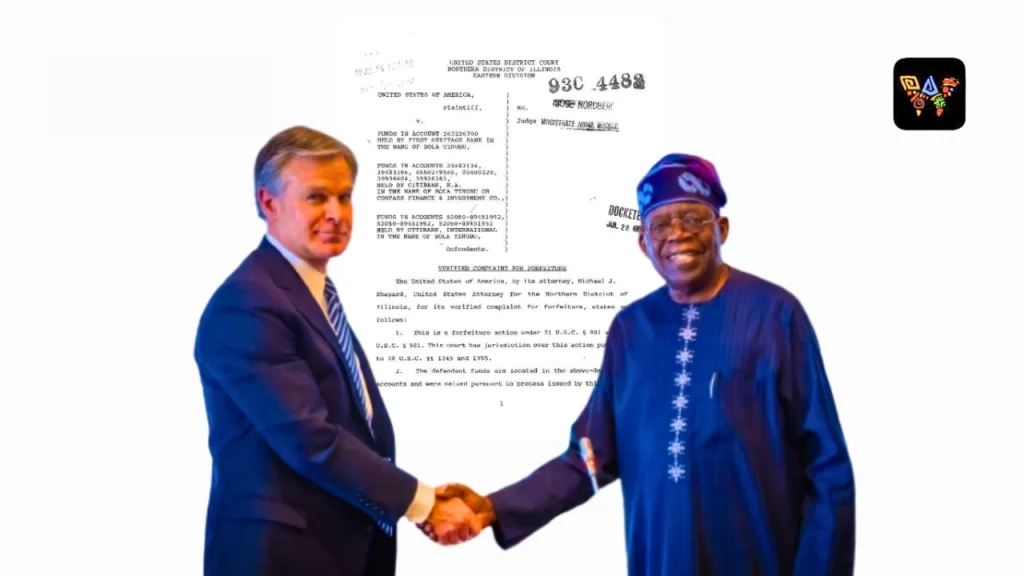
In a dramatic turn, U.S. intelligence agencies, including the CIA, FBI, and DEA, have officially declared that Nigerians have “no right” to unfiltered access to confidential information about President Bola Tinubu, stating that his records are protected under U.S. national security interests. This revelation emerged from a memorandum filed before the U.S. District Court for the District of Columbia in response to a Freedom of Information Act (FOIA) lawsuit seeking the full disclosure of Tinubu’s alleged involvement in drug trafficking.
Journalist David Hundeyin, a central figure in the lawsuit, announced that on Monday, the CIA, FBI, and DEA presented their opposition to a motion for summary judgment in the FOIA case. According to Hundeyin, the agencies’ position is clear: Nigerians have a right to transparency within their government but not to personal details about their president.
A segment of the CIA’s filing acknowledged Tinubu’s role as a cooperating “human source,” cautioning that disclosing his relationship with the agency would jeopardize U.S. intelligence operations and potentially endanger Tinubu and those close to him. “Human sources can be expected to furnish information to the CIA only when they are confident the CIA can and will do everything in its power to prevent the public disclosure of their cooperation,” the filing reads. It added that any confirmation of Tinubu’s involvement could lead to retaliatory threats and disrupt the agency’s broader intelligence network.
In a striking statement, the DEA further stressed its refusal to allow unredacted disclosure of Tinubu’s drug-related files. “While Nigerians have a right to be informed about what their government is up to, they do not have a right to know what their president is up to,” the agency wrote, underscoring its position to protect sensitive details about Tinubu’s alleged heroin trafficking investigation.
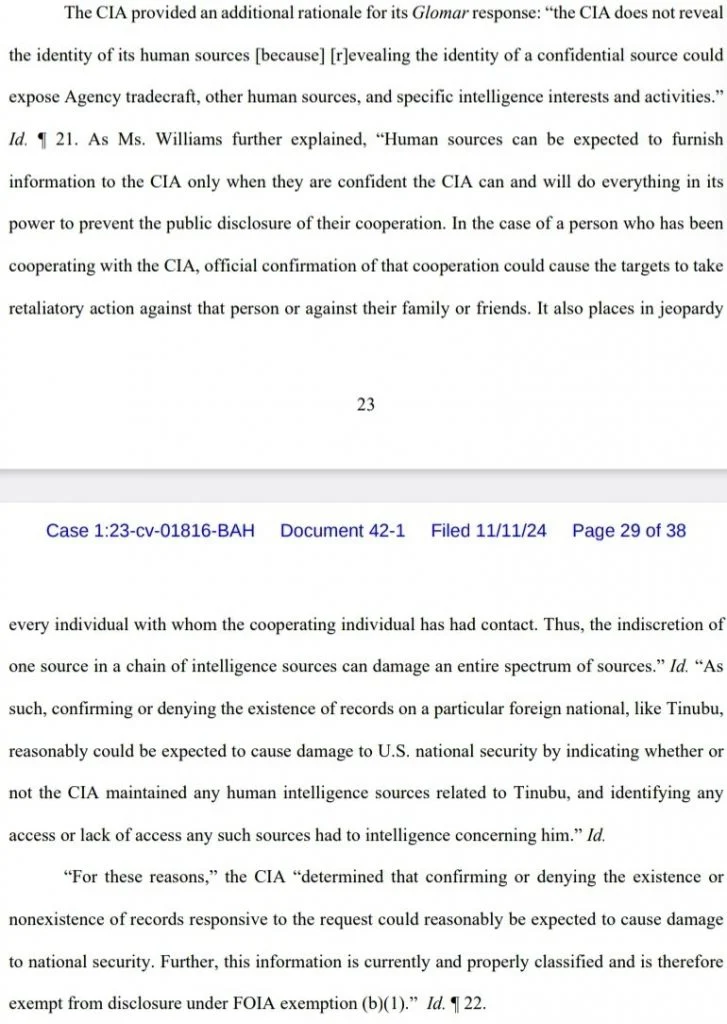
These statements by U.S. intelligence not only deepen questions about Tinubu’s past but highlight the agency’s stance on maintaining secrecy over their affiliations with foreign leaders. The revelations have triggered a renewed debate on U.S. influence in African politics and stirred frustrations about a lack of transparency regarding leaders like Tinubu. The FOIA case, led by Hundeyin and PlainSite’s Aaron Greenspan, continues to challenge these redactions, aiming to bring the truth to light despite significant opposition.
For further details, visit:



Comments are closed for this story.