
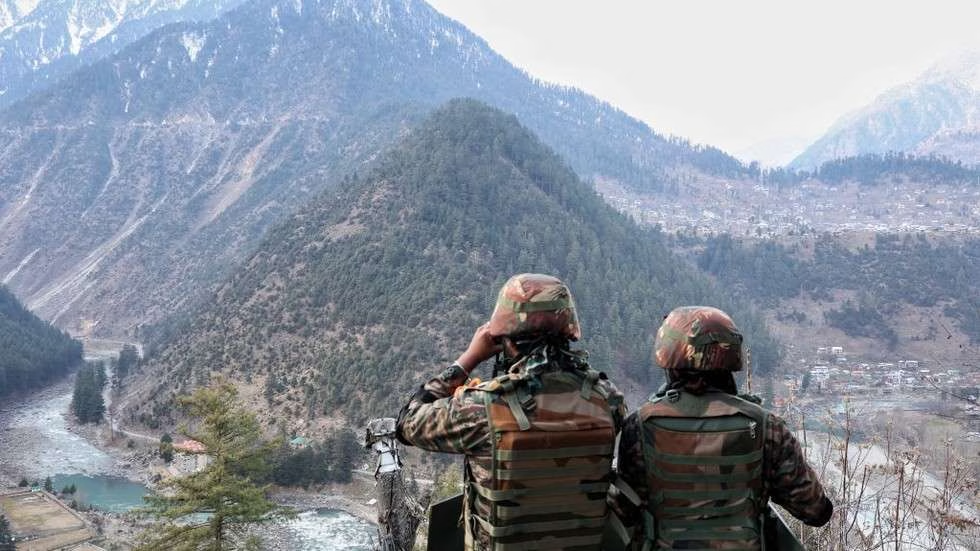
Tensions between Pakistan and India continue to escalate, with the Pakistani military successfully test-launching a short-range surface-to-surface missile on Monday. This is the second such launch in three days, amid heightened tensions between the two nations following a deadly terrorist attack in Kashmir last month. The test launch of the Fatah series missile, which has a range of 120 kilometers, was aimed at ensuring the operational readiness of troops and validating key technical parameters, including the missile’s advanced navigation system and enhanced accuracy. According to a statement from the Inter-Services Public Relations (ISPR), the event was witnessed by senior officers of the Pakistan Army, who expressed complete confidence in the operational preparedness of the Pakistan Army to thwart any aggression against the country’s territorial integrity. The Fatah missile series is a family of domestically developed surface-to-surface guided rocket systems produced by Pakistan’s state-owned defense conglomerate, Global Industrial & Defence Solutions (GIDS). The latest missile test comes after Islamabad successfully tested a surface-to-surface missile called the Abdali Weapon System, which has a range of 450 kilometers, on Saturday. Both missile tests were part of a military drill named Exercise Indus. India has not officially commented on the tests, but the Hindustan Times reported that New Delhi had condemned the planned Pakistani ballistic missile test as a “reckless act of provocation” before the first drill. The escalation between Islamabad and New Delhi began after terrorists killed 26 civilians in the Baisaran Valley, a popular tourist destination in Indian-administered Union Territory of Jammu and Kashmir, on April 22. The Resistance Front, suspected to have links to the Pakistan-based militant group Lashkar-e-Taiba, initially took credit for the attack but later appeared to retract its claim. Indian authorities have named three individuals as suspects, two of whom are Pakistani citizens. Following the incident, India accused Pakistan of supporting armed militants involved in cross-border operations, an allegation that Pakistan has strongly rejected. In response to the terrorist attack, Indian Prime Minister Narendra Modi granted the country’s armed forces “full operational freedom” to respond to the attack. The situation has continued to deteriorate, with both nations expelling diplomats, closing airspace, and engaging in cross-border shelling along the Line of Control (LoC), a military demarcation line that divides the two nations. The international community is watching the situation closely, with Russian President Vladimir Putin recently condemning the Kashmir terror attack and calling for restraint. As the situation continues to unfold, it remains to be seen how the tensions between Pakistan and India will be resolved.
Global News
2 min read
Pakistan tests second missile in three days amid tensions with India
Tensions between Pakistan and India continue to escalate, with the Pakistani military successfully test-launching a short-range surface-to-surface missile on Monday. […]


Comments are closed for this story.