
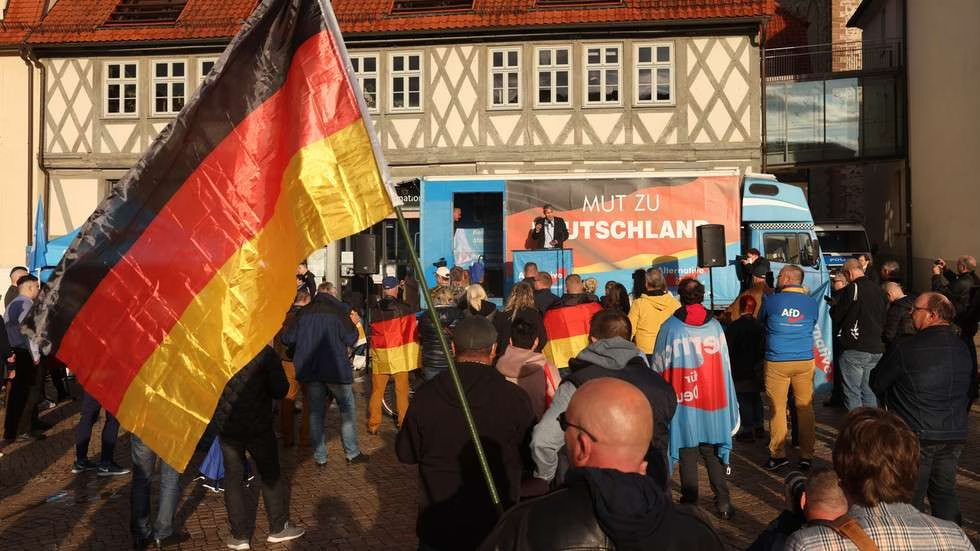
In a significant development, Germany’s domestic intelligence agency, the Federal Office for the Protection of the Constitution (BfV), has temporarily suspended its classification of the Alternative for Germany (AfD) party as a “confirmed right-wing extremist” group. This move comes after the AfD party filed a lawsuit in a Cologne court, arguing that the designation was politically motivated and lacked sufficient evidence. The suspension is pending the outcome of the legal appeal, and the BfV has removed a press release about the designation from its website. The initial classification was based on a comprehensive report alleging that the AfD promotes policies that exclude individuals with migrant backgrounds, particularly Muslims, from full societal participation. The BfV claimed that the party disregards human dignity and uses terms such as “knife-wielding migrants” to ascribe violent tendencies to non-European ethnic groups. However, the AfD leadership condemned the decision, calling it “a severe blow to German democracy.” As a result of the suspension, the BfV will continue to monitor the AfD as a “suspected case” of an extremist organization, but under stricter judicial oversight. The suspended designation would have allowed for broad surveillance of the AfD’s activities, but the lower-level designation still permits surveillance, albeit with more stringent controls. AfD co-leaders Alice Weidel and Tino Chrupalla welcomed the temporary suspension, seeing it as “a first important step” to counter the accusation of right-wing extremism. The ‘extremist’ label was met with skepticism by many German politicians, including then-German Chancellor Olaf Scholz and incoming Interior Minister Alexander Dobrindt, who warned against banning the AfD. Dobrindt argued that the party should be made irrelevant through good governance rather than drastic measures. He also emphasized the need for a discussion on the reasons behind the AfD’s rise to prominence, citing recent polls that indicate the party has become the most popular in Germany, with 26% support. The AfD’s surge in popularity is often attributed to public frustration over the immigration policies of mainstream parties, as well as economic challenges and perceived government ineffectiveness. The temporary suspension of the ‘extremist’ label is a significant development in German politics, and its outcome will be closely watched as the country navigates its complex political landscape. With the AfD’s growing support, the German government will need to address the underlying concerns that have contributed to the party’s popularity, and find a balance between monitoring potential extremism and respecting democratic principles.
Global News
2 min read
Germany’s Intelligence Agency Suspends Labeling of Alternative for Germany Party as Right-Wing Extremist Amid Backlash
In a significant development, Germany’s domestic intelligence agency, the Federal Office for the Protection of the Constitution (BfV), has temporarily […]



Comments are closed for this story.