
Urgent Human Rights Concerns Raised Over Deportation of Venezuelan Immigrants
In a shocking move, the United Nations human rights office has warned of "huge human rights concerns" surrounding the deportation of hundreds of Venezuelan immigrants from the United States to El Salvador. This drastic action has left the international community reeling, with many questioning the legality and ethics of the decision. According to Liz Throssell, a spokesperson for the Office of the High Commissioner for Human Rights (OHCHR), "Lawyers don’t know where they are, and in fact, no one knows where they are for certain, and we don’t know the legal basis" for their deportation.
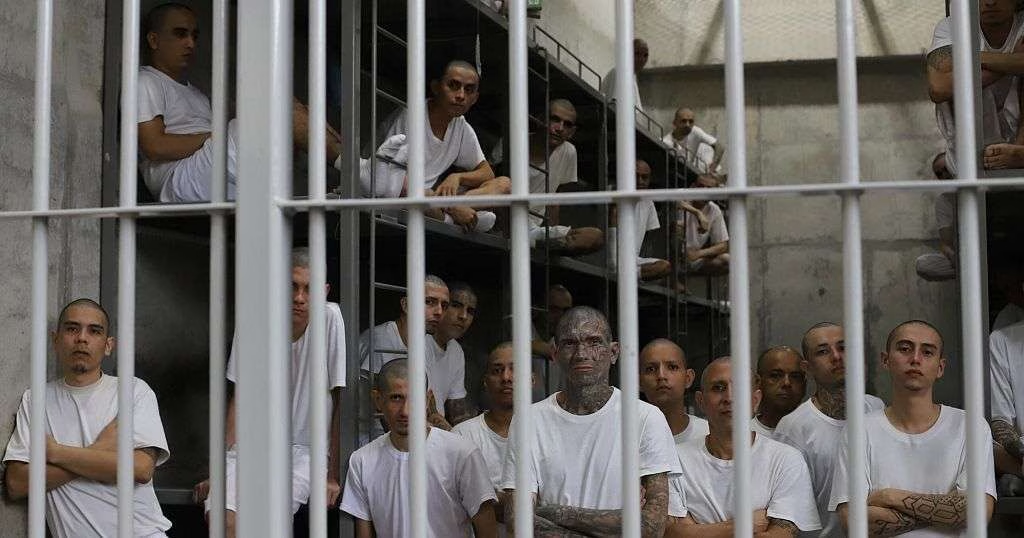
The incident began in March when the U.S. government deported over 200 Venezuelan immigrants alleged to have ties to the Tren de Aragua gang to El Salvador, with the Salvadoran government agreeing to imprison them at a cost of $6 million. However, since their deportation, the immigrants have been denied access to lawyers and contact with their families, sparking widespread concern about their welfare and the legitimacy of their detention. As Throssell noted, "Reports indicate that many of the detainees were not informed of the US Government’s intention to deport them to be held in a third country, and many did not have access to a lawyer."
The deportations were carried out under the Alien Enemies Act of 1798, a law that has been used only three times in U.S. history, including during World War II to justify the detention of Japanese-American civilians. The law requires a president to declare a state of war, granting them extraordinary powers to detain or remove foreigners. However, the Trump administration has not provided evidence that the deported individuals are members of the Tren de Aragua gang or that they committed any crimes in the United States.
The situation has been further complicated by the fact that flights carrying the immigrants were already in the air when a federal judge issued an order temporarily barring the deportations. The immigrants were taken to the notorious CECOT facility in El Salvador, a prison known for its harsh conditions and limitations on basic rights. The UN Human Rights Office has received information from family members and lawyers regarding over 100 Venezuelans believed to be held in CECOT, with many expressing "a sense of complete powerlessness" and pain at seeing their relatives labeled as violent criminals without any court judgment.
International human rights organizations have since filed a lawsuit with the Inter-American Commission on Human Rights, calling for the release of the Venezuelans. The incident has raised serious questions about the treatment of immigrants and the use of wartime laws to justify deportations. As the global community watches, it remains to be seen how this situation will unfold and what implications it may have for human rights and international law. One thing is clear, however: the deportation of these Venezuelan immigrants has sparked a human rights crisis that demands immediate attention and action.


Comments are closed for this story.