
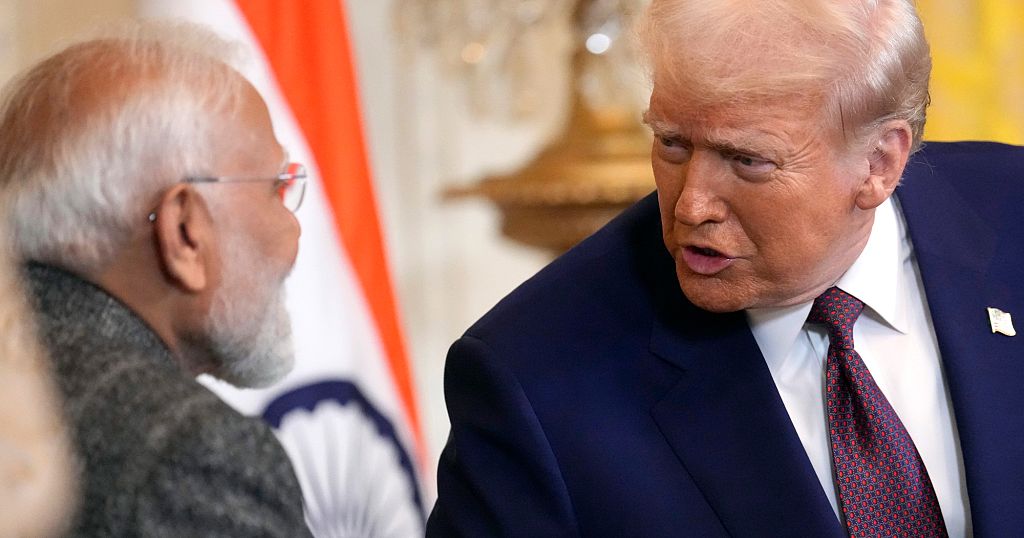
The United States will impose steep new tariffs on Indian goods beginning Friday, escalating economic pressure on New Delhi over its purchases of Russian oil and military hardware. Former President Donald Trump unveiled the decision on Wednesday, emphasizing a 25% tariff hike and additional import levies as a direct response to India’s deepening trade ties with Moscow, which he argues indirectly support Russia’s military actions in Ukraine. The move signals a hardening U.S. stance on global trade relationships, even as officials clarify that negotiations with India remain active. Trade analysts warn the penalties could disproportionately affect India, given its reliance on the U.S. as its top export destination. Katherine Hadda, a former U.S. diplomat in India and current senior associate at the Center for Strategic and International Studies, highlighted the lopsided trade dynamics: “The U.S. trade deficit with India sits at roughly $46 billion. India exports twice as much to the U.S. as it imports, yet it doesn’t rank among America’s top ten export markets,” she said. “This imbalance means the stakes are far higher for India.” India’s energy vulnerabilities further complicate its position. With 80% of its fossil fuels imported, the country has faced mounting challenges since U.S. sanctions curtailed access to Iranian and Venezuelan oil. “Shifting suppliers now won’t be simple,” Hadda noted, referencing India’s increased reliance on discounted Russian crude amid global market instability. The White House framed the tariffs as a demonstration of resolve in rebalancing trade relationships, with Trump’s allies portraying the measures as a strategic play to strengthen U.S. leverage. Critics, however, caution that the decision risks cascading economic consequences. Higher tariffs could inflate costs for American consumers and businesses, potentially hindering growth at a time of persistent inflation and fragile global supply chains. Some analysts also warn of retaliatory measures from India, which has historically resisted unilateral trade pressures. The timing raises broader concerns about escalating trade disputes as nations navigate fluctuating energy markets and shifting alliances. While U.S. officials stress diplomatic channels remain open, the immediate fallout may test India’s capacity to diversify trade partnerships and energy sources. For now, global markets watch cautiously, wary of fresh disruptions in an already volatile economic landscape.
Global News
2 min read
U.S. Slaps 25% Tariffs on India Over Russian Oil Purchases
The United States will impose steep new tariffs on Indian goods beginning Friday, escalating economic pressure on New Delhi over […]
More stories like this

Metro News Africa
Europe’s Deadly Heat Wave Raises Alarms: Could the US Be Next?

Metro News Africa
World Cup Round of 32 Takes Shape: Germany, Mexico, and USA Lead the Charge
Metro News Africa
America’s World Cup Loss Before the First Kick: Greed and Division Tarnish the Beautiful Game

Global News
Comments are closed for this story.