
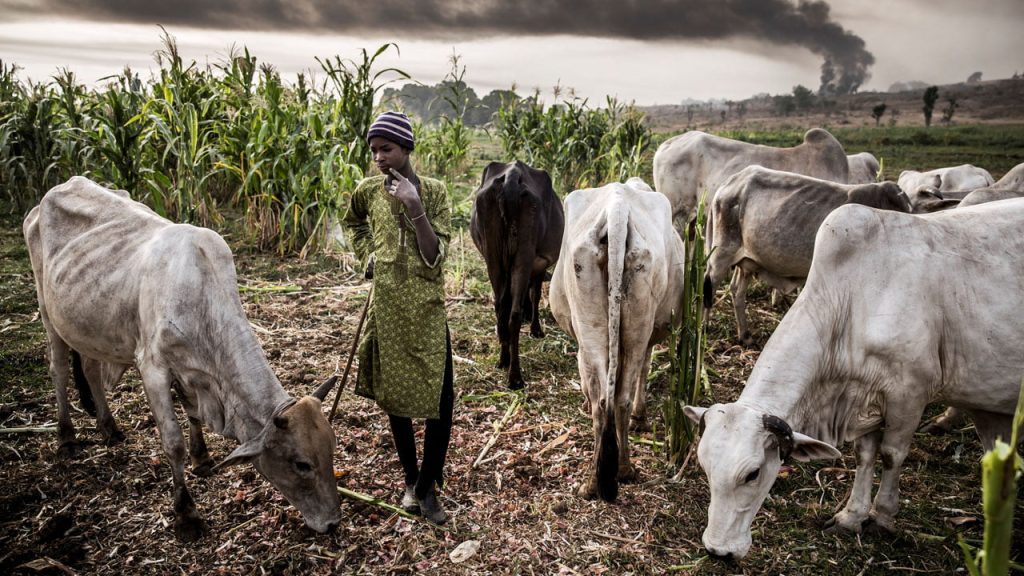
A prominent Igbo advocacy group has urged lawmakers in southeastern Nigeria to criminalize open grazing and called for community-led security initiatives to combat escalating violence attributed to armed herders. The Igbo National Union Worldwide (INU-W) issued the demand in response to what it described as unchecked attacks on rural communities, including killings, sexual violence, and farmland destruction across the region. In a joint statement by National President Ngozi Ogbomor and Administrative Secretary Austin Mary Ndukwu, the group criticized state security forces for allegedly failing to curb violence by individuals it termed “Fulani terrorists posing as herdsmen.” Reports of attacks have surged in Nigeria’s southeastern states—Enugu, Imo, Abia, Anambra, and Ebonyi—where disputes over land use between nomadic herders and local farmers have intensified in recent years. INU-W claims not a single assailant has been prosecuted despite widespread incidents. “Are we to pretend nothing is happening while our people are killed, women are assaulted, and crops vital to livelihoods are destroyed?” the statement read. The group argued that formal legislation banning open grazing—a practice allowing unrestricted livestock movement—would reduce conflict triggers. It also pressed communities to establish vigilante units for self-defense, warning that reliance on national authorities had proven inadequate. The call reflects growing frustration with what critics describe as federal inaction on communal clashes, which have displaced thousands and deepened ethnic tensions. INU-W’s appeal targeted regional leaders, urging traditional rulers, business figures, and civil society groups to mobilize grassroots resistance. “The carnage has spiraled beyond control,” the statement said, highlighting allegations of security personnel’s passive stance during attacks. While open grazing bans exist in some Nigerian states, enforcement remains inconsistent. The southeast, predominantly inhabited by the Igbo ethnic group, has seen intermittent protests demanding greater autonomy over security matters. Analysts note the volatile mix of historical grievances, land scarcity, and weapon proliferation compounding the crisis. INU-W’s proposals, however, risk exacerbating vigilante-related risks if not carefully managed. The group’s demands arrive amid nationwide debates on rural security reforms, with policymakers divided between ranching initiatives and militarized responses. For now, southeastern residents brace for further uncertainty as institutional solutions remain elusive.
Metro News Africa
2 min read
SE Nigeria: Open Grazing Ban, Vigilantes to Stop Herdsmen Attacks
A prominent Igbo advocacy group has urged lawmakers in southeastern Nigeria to criminalize open grazing and called for community-led security […]
More stories like this

Metro News Africa
IGP Disu Removes 6 MOPOL Commanders Over ₦70k Extortion
![Troops, terrorists exchange gunfire in Kogi [VIDEO]](https://mediatalkafrica.com/wp-content/uploads/2026/01/Terrorists-Exchange-Gunfire-With-Nigerian-Troops-In-Kogi-State-768x576.jpeg)
Metro News Africa
Operation FANSAN YAMMA Recovers 6 Cows, Arrests 4 Lakurawa Suspects

Metro News Africa
Edo NDLEA Flags Forest Cannabis, Schoolchildren Drug Involvement
Metro News Africa
Comments are closed for this story.