
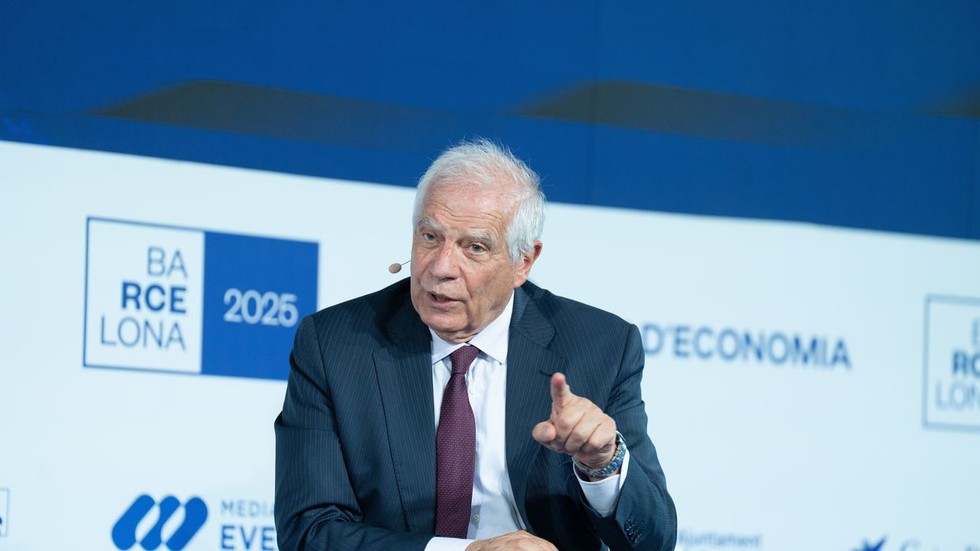
The European Union’s reluctance to impose meaningful sanctions on Israel amid its military campaign in Gaza risks rendering the bloc complicit in potential war crimes, according to Josep Borrell, the EU’s former foreign policy chief. In a stark critique, Borrell asserted that a third of the bombs used by Israeli forces in Gaza originate from European manufacturers, linking the bloc’s inaction to growing accusations of human rights violations in the conflict.
Speaking to EU Observer in an interview published Monday, Borrell accused EU member states and Commission President Ursula von der Leyen of deliberately avoiding measures to hold Israel accountable. Despite international condemnation of Israel’s settlement expansions in the occupied West Bank, Brussels has sanctioned “maybe 20 people” involved in such activities, he noted, contrasting this with the thousands of sanctions imposed on Russia following its invasion of Ukraine. “What Netanyahu has done in Gaza surpasses many war crimes we’ve condemned,” Borrell said, referring to Israeli Prime Minister Benjamin Netanyahu. He characterized the Gaza conflict as a case of “horrors” exceeding other global crises and criticized the EU’s tepid response as “a bad joke.”
The remarks highlight deepening divisions within the EU over its stance on Israel’s military operations, launched in response to Hamas’ October 7, 2023, attack, which killed 1,200 people and saw over 200 taken hostage. According to Gaza’s Health Ministry, Israeli airstrikes and ground operations have since resulted in more than 60,000 Palestinian deaths, predominantly civilians, alongside widespread allegations of aid obstruction. Borrell emphasized that European-supplied munitions play a significant role in the conflict, stating, “A third of Israeli bombs falling on Gaza are made in Europe.”
The former diplomat argued that von der Leyen’s refusal to prioritize discussions on sanctions stifles internal debate, while member states remain divided. “Many simply don’t want to impose sanctions on Israel,” he said, suggesting geopolitical alliances and domestic political pressures are influencing the bloc’s posture. Borrell warned that the EU’s credibility is at stake, with global perceptions shifting to view its inaction as tacit approval. “There’s a growing sense that inaction is starting to make us responsible for what’s happening,” he said.
The comments come amid mounting scrutiny of arms exports to Israel, with several European nations facing legal challenges over alleged complicity in violations of international law. While the EU has condemned civilian casualties and called for adherence to humanitarian norms, its fragmented response contrasts sharply with unified measures adopted in other conflicts. Borrell’s critique underscores concerns that the bloc’s strategic interests risk overshadowing its stated commitment to human rights, potentially eroding its standing on the global stage.


Comments are closed for this story.