
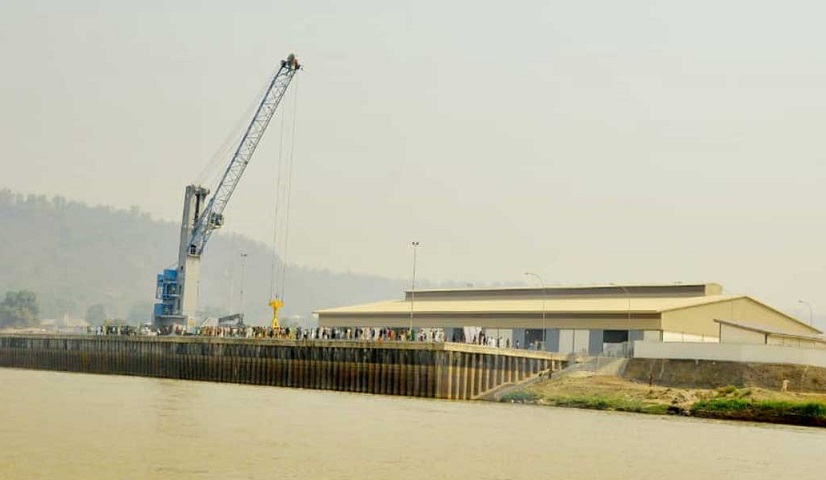
Two former Nigerian military leaders have thrown their weight behind revitalizing a long-stalled port project seen as vital to regional trade and economic growth. Retired Generals Ibrahim Babangida and Abdulsalami Abubakar pledged support for operationalizing the Baro Inland Port during meetings with Nigerian lawmakers investigating the facility’s delays. Located in north-central Niger State along the River Niger, the port has remained inactive since its 2019 inauguration despite billions of naira in investments. Babangida, who ruled Nigeria from 1985 to 1993, described the lawmakers’ visit as “timely,” noting he championed the project under multiple administrations. “We’ve prayed for this over many years,” he said, recalling appeals to former Presidents Olusegun Obasanjo and Musa Yar’Adua. Expressing guarded optimism about current efforts, he vowed to pressure policymakers: “If you slacken, we will prod you to keep going.” The 81-year-old framed the port as essential for Niger State’s industrialization, calling it a “catalyst for development.” His successor, Abubakar (head of state 1998–1999), emphasized institutional safeguards for the project’s survival. He urged elevating Baro to an internationally recognized waterway, arguing this would shield it from political interference. “Successive governments acknowledged its importance but let it rot despite commissioning ceremonies,” he said, citing neglect under his own administration and those of Babangida and Sani Abacha. The retired general outlined infrastructure prerequisites: dredging the River Niger to Baro, rebuilding rail links to northern Nigeria, constructing reliable roads, and designating the port a tax-free trade zone. Lawmakers from the House of Representatives’ ad hoc committee met both leaders during a fact-finding mission to assess the port’s rail connections, access routes, and operational hurdles. Committee chair Saidu Abdullahi confirmed plans to engage state officials and traditional leaders before finalizing recommendations. The port—envisioned as a logistics hub connecting inland waterways and rail networks—has failed to function despite its strategic blueprint. The push comes as Nigerian policymakers seek to optimize underused transport corridors to reduce road congestion and boost cross-border trade. Baro’s supporters argue its revival could ease commodity distribution to landlocked regions while stimulating agriculture and manufacturing. With Niger State bordering key commercial centers, analysts suggest operational ports along the River Niger might unlock shorter trade routes to neighboring countries like Mali and Niger Republic. However, critics cite Nigeria’s history of abandoned megaprojects, questioning whether political will exists to sustain follow-through. Committee members, accompanied by transport ministry officials and railway representatives, aim to identify systemic bottlenecks. Their findings could influence budget priorities and interagency coordination for similar initiatives nationwide. For now, stakeholders maintain cautious hope—four years after its fanfare-filled launch, Baro’s cranes and warehouses await their first cargo.
Metro News Africa
2 min read
Ex-Nigerian Leaders Push Baro Port Revival to Boost Economy
Two former Nigerian military leaders have thrown their weight behind revitalizing a long-stalled port project seen as vital to regional […]
More stories like this

Metro News Africa
The Cosmic Detectives: What Meteorites Reveal About Our Ancient Solar System
Metro News Africa
2027: A Call to Unity—Nigerians Must Rally and Oust Tinubu, Says Buba Galadima

Metro News Africa
Inside the Inferno: Unlocking the Secrets of Earth’s Most Volatile Forces

Metro News Africa
Comments are closed for this story.