
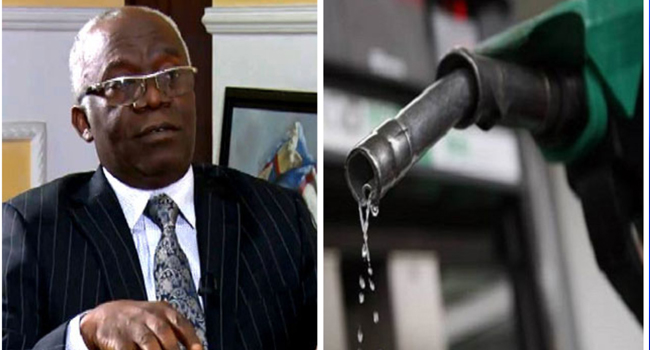
A looming industrial action in Nigeria’s oil and gas sector has sparked concerns over workers’ rights. The National Union of Petroleum and Gas Workers (NUPENG) announced plans to embark on an indefinite strike starting September 8, in response to Dangote Refinery’s alleged efforts to prevent its newly hired drivers from joining established unions. Human‑rights lawyer Femi Falana has urged the federal government to intervene, citing the refinery’s policy as a violation of the Nigerian Constitution, the Trade Union Act, and several international agreements.
NUPENG’s decision to strike is a direct reaction to Dangote Refinery’s reported plan to compel its compressed natural gas (CNG) tanker drivers to sign contracts that bar them from affiliating with labor unions. However, the Petroleum Tanker Drivers (PTD) and the Direct Trucking Company Drivers Association (DTCDA) have declared their refusal to participate in the strike. In solidarity with NUPENG, the Petroleum Products Retail Outlets Owners Association of Nigeria (PETROAN) announced it will halt the lifting and dispensing of petroleum products for three days, beginning September 9.
Falana’s statement highlights the legal implications of Dangote Refinery’s policy, which he says breaches Section 40 of the Nigerian Constitution, Section 12 of the Trade Union Act, and Article 10 of the African Charter on Human and Peoples’ Rights (Ratification and Enforcement) Act. He also notes that the policy violates several international agreements, including the ILO’s Freedom of Association and Protection of the Right to Organise Convention (1948, No. 87) and the Right to Organise and Collective Bargaining Convention (1949, No. 98).
The strike carries significant implications for Nigeria’s oil and gas industry, with the potential to disrupt fuel supply and broader economic activities. The federal government’s response will be closely watched as it seeks to balance the interests of workers, employers, and the wider economy. With the strike set to commence on September 8, timely government intervention is crucial to resolve the dispute and protect workers’ rights, underscoring the need for a balanced approach to labor relations that respects unionisation and collective bargaining while supporting economic stability.




Comments are closed for this story.