
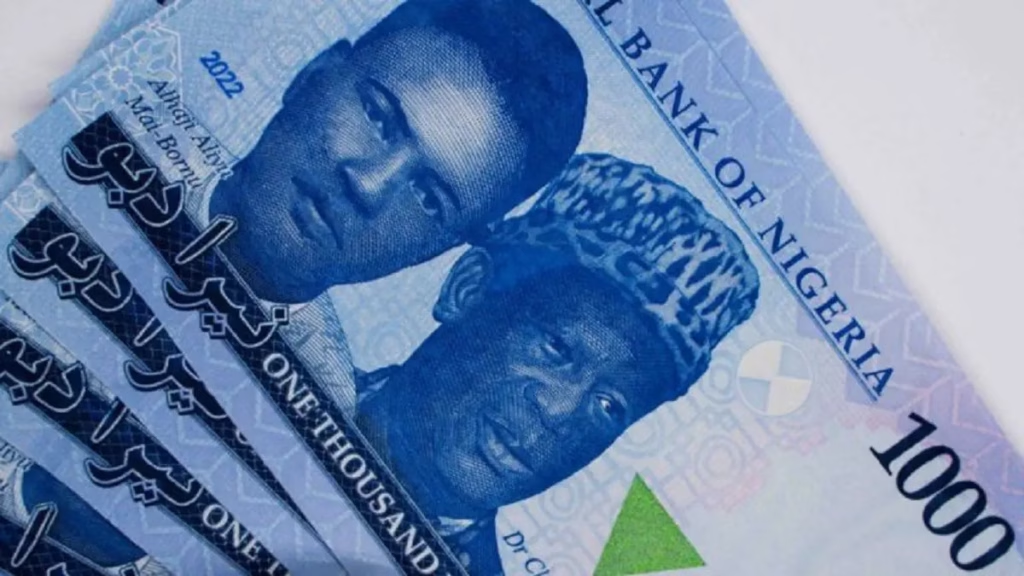
The Nigerian naira has appreciated against the United States dollar in both the official and parallel foreign‑exchange markets. According to the Central Bank of Nigeria’s official data, the naira closed at N1,465.68 per dollar on Friday, a gain of N14.98 or 1.02 % from the previous week’s closing rate of N1,480.66. In the black market, the naira also strengthened, trading at N1,485 per dollar compared with N1,495 on September 27, 2025—a weekly improvement of N10.
This uptrend occurs despite day‑to‑day fluctuations in the exchange rate and is likely linked to the continued rise in Nigeria’s external reserves. As of October 2, 2025, reserves had increased to $42.40 billion, a 0.33 % growth from the $42.26 billion recorded on September 26. The rise reflects foreign investment, export earnings and other factors that provide a cushion for the naira, helping to stabilise the currency and boost investor confidence.
The naira’s performance is closely watched by investors, policymakers and economists because of its significant impact on the country’s economy and trade. A stronger naira can reduce import costs and increase consumers’ purchasing power, representing a positive development for Nigeria. However, fundamental economic variables—such as inflation, interest rates and fiscal policy—will continue to influence the exchange rate.
As the global economy evolves, Nigeria’s economic policies and external factors will play a crucial role in shaping the naira’s trajectory. The recent performance underscores the complex dynamics of the foreign‑exchange market, where economic fundamentals, monetary policy and external influences interact. Consequently, the stability of the naira will remain a key focus for policymakers and investors as the country navigates its economic path.




Comments are closed for this story.