
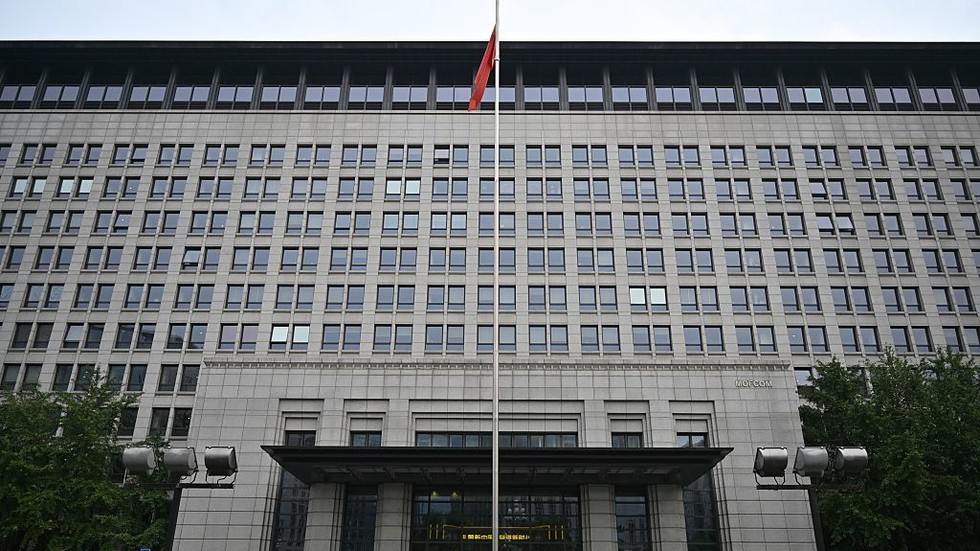
China has rejected the United States’ latest tariff threats, urging Washington to pursue a negotiated settlement rather than escalating tensions. The warning came in an official statement released by China’s Ministry of Commerce on Sunday, responding to President Donald Trump’s plan to impose a 100 % tariff on Chinese imports. The U.S. move is reportedly retaliation for Beijing’s new restrictions on rare‑earth exports, which are vital for products ranging from smartphones to fighter jets.
China’s Ministry of Commerce said, “China’s position on the trade war is consistent: we do not want it, but we are not afraid of it.” It added that “willful threats of high tariffs are not the right way to get along with China,” and warned that if the United States persists on the “wrong way,” China will take resolute measures to protect its legitimate rights and interests.
The renewed friction threatens to derail a possible meeting between Trump and Chinese President Xi Jinping, scheduled for the sidelines of the APEC summit in South Korea in late October or early November. That meeting had been viewed as an opportunity to revive dialogue between the world’s two largest economies. Both sides have accused each other of breaching the trade cease‑fire by introducing new restrictions. Trump has claimed China is “becoming very hostile” and “holding the world captive” by limiting access to rare earths. Beijing’s new export rules require foreign companies to obtain special approval before exporting goods containing even minimal amounts of Chinese‑sourced rare‑earth elements.
In August, the United States and China agreed to extend a tariff truce after a trade war in which both sides imposed ever‑increasing duties. Under the 90‑day extension, U.S. tariffs on Chinese imports were reduced from 145 % to 30 %, while China’s tariffs on American products fell from 125 % to 10 %. The extension is set to expire in November, and the latest developments have raised concerns about the future of trade relations between the two countries.
China’s refusal to yield to U.S. pressure reflects its reliance on economic leverage to counter American tariffs. The country has made clear it will not bend to Washington’s demands and will instead take measures to protect its own interests. As trade tensions continue to escalate, the international community is watching closely to see how the situation will unfold.


Comments are closed for this story.