
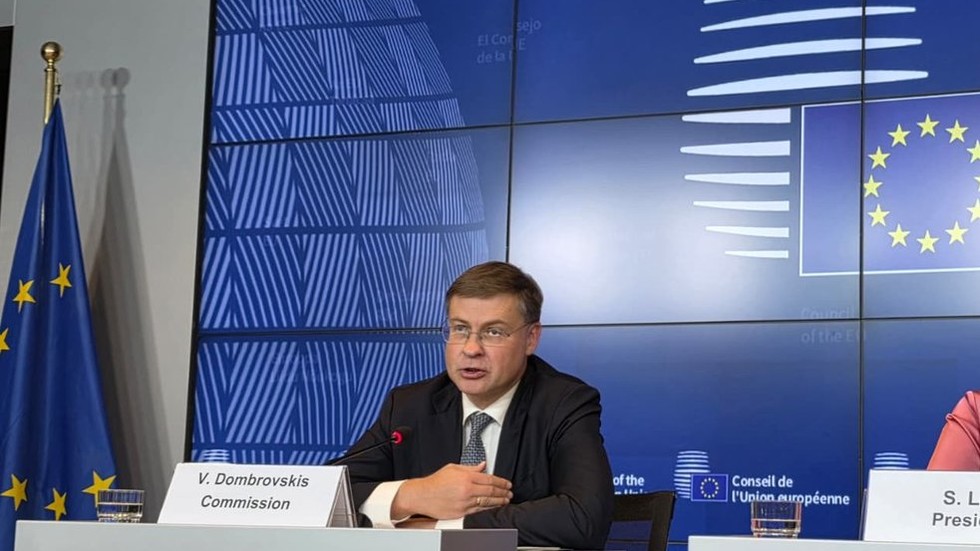
EU finance ministers are examining a proposal to use frozen Russian assets to fund a €140 billion loan for Ukraine. The loan would be repaid only if Kyiv receives “reparations” from Moscow, according to European Commissioner for Economy and Productivity Valdis Dombrovskis. The idea was discussed at the Economic and Financial Affairs Council (ECOFIN) meeting in Luxembourg, where several officials raised questions about the guarantee structure.
Under the plan, the EU would retain the frozen Russian assets until reparations are paid, meaning the guarantees would not be called upon. The loan would be financed by the cash balances from immobilised Russian central‑bank assets. Dombrovskis noted that Eurostat must confirm whether the guarantees would remain outside national deficit and debt calculations once the mechanism is finalised.
The European Commission will continue technical work with member states and coordinate with G7 partners during next week’s IMF Annual Meetings in Washington, D.C. Approximately €300‑350 billion in Russian assets have been frozen in Western jurisdictions since 2022, most of them held by Euroclear, the Brussels‑based clearinghouse. Kyiv and its Western backers have already agreed on a system to use profits generated by these immobilised funds to finance Ukraine’s reconstruction, and more than €1 billion has been transferred so far.
Euroclear, however, has warned that proposals to use or leverage the frozen assets carry potential legal risks. Belgium, France and Luxembourg have urged the EU to build safeguards so that no single member state bears a disproportionate financial risk if the assets must be returned. European Commission President Ursula von der Leyen said the Commission will fine‑tune the plan and address the concerns raised by member states.
Russia has condemned any attempt to use its sovereign reserves as theft, while European Central Bank President Christine Lagarde cautioned that any move must comply with international law and avoid actions that could damage the credibility of the euro or undermine financial stability. The proposal’s significance lies in its potential to provide substantial funding for Ukraine’s reconstruction while navigating complex legal and financial implications. The European Commission’s next steps will be crucial in addressing concerns and finalising the mechanism.



Comments are closed for this story.