
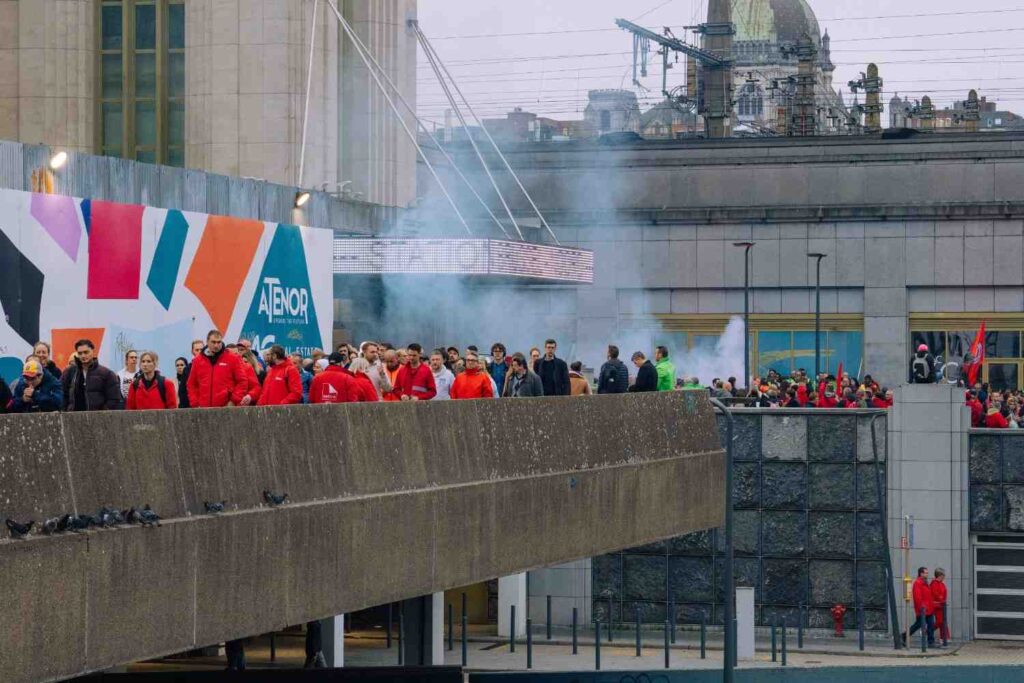
A national strike in Belgium has led to the cancellation of flights and widespread disruption of public transport, with tens of thousands expected to join a demonstration in Brussels. The strike, the latest in a series affecting the country, is a response to the government’s proposed austerity measures, including pension reforms and a freeze on wage indexation.
Brussels Airport, the nation’s largest, has cancelled all departures because of a shortage of security staff, and Charleroi Airport—an important hub for low‑cost carrier Ryanair—has also been unable to operate flights. In the capital, metro, tram and bus services are experiencing delays and cancellations.
Prime Minister Bart De Wever’s government is seeking substantial savings to address a budget deficit that exceeds European Union limits. Trade unions strongly oppose the reforms, arguing they will unfairly impact workers and pensioners, and have called on the public to protest what they say will benefit only the wealthy. The strike is expected to increase pressure on a government that failed to agree on a budget on Monday, prompting the prime minister to postpone a key parliamentary speech.
The administration aims to find around €10 billion in savings while also pledging increased defence spending as part of a NATO‑driven rearmament push. This protest action is the latest in a series of strikes since De Wever took office in February, reflecting Belgium’s long history of industrial action in which trade unions play a significant role in shaping policy.
The current strike is likely to have considerable economic and social repercussions and will be closely watched by international observers. As the situation unfolds, the government will face growing pressure to reconsider its austerity proposals and engage in dialogue with the unions. The outcome will have important implications for Belgium’s economy and social stability, especially as the European Union monitors the developments closely.




Comments are closed for this story.