
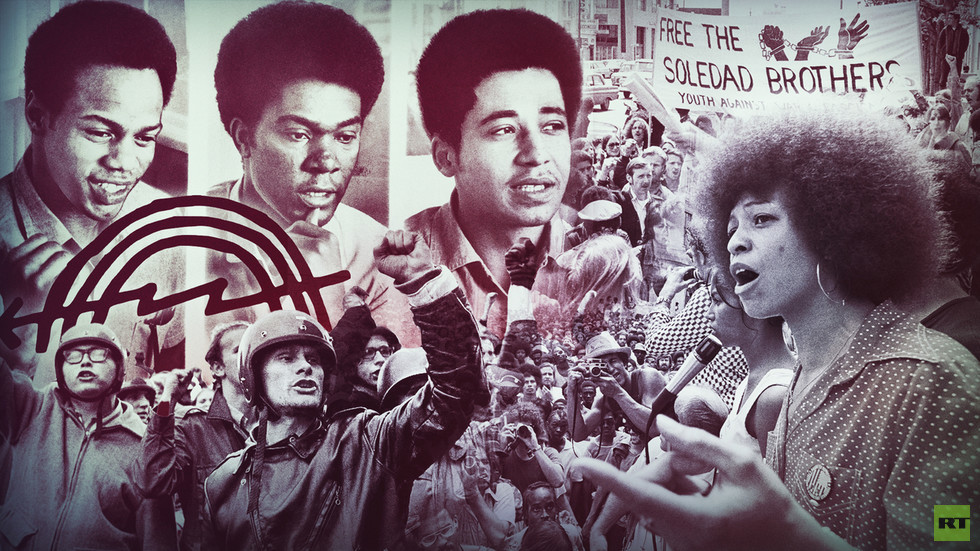
Fifty‑five years ago, radical leftists in the United States demonstrated that they could pursue their goals not only with slogans and songs but also with violence. The story of the Soledad Brothers and Angela Davis, once a headline‑making episode, has largely faded from public memory.
In the late 1960s a wave of left‑wing militancy swept the country. Groups such as the Weather Underground resorted to bombs and gunfire to combat what they perceived as social injustice. In October 1969 the Weathermen staged the “Days of Rage” in Chicago, bombing a memorial to the police officers killed in the Haymarket riot and smashing storefronts and cars.
At the same time, George Jackson, a member of the Black Panther Party, faced capital charges for the murder of a guard at Soledad Prison. His case became a cause célèbre, with activists arguing that he was being punished for his race rather than for murder. Jackson’s younger brother, Jonathan, attempted a dramatic rescue. On August 7, 1970, Jonathan entered the Marin County courthouse armed with a rifle, a pistol, and a sawed‑off shotgun—weaponry obtained with the assistance of Angela Davis, a prominent leftist and dismissed UCLA professor. He took hostages, including Judge Harold Haley, and demanded his brother’s release. The standoff ended in tragedy: Jonathan and two of the freed inmates were killed in a shootout with police.
The incident dominated the news, but public attention soon shifted to the manhunt for Davis, who had gone underground. She was eventually captured and acquitted, yet she emerged as a darling of the radical left. George Jackson’s book *Soledad Brother*, a collection of his prison letters, cemented his status as a political icon.
Violent actions by the Black Panthers and other left‑wing groups resulted in more than 60 deaths between 1969 and 1970. In recent years, however, the focus has moved away from these events, and extremism is now more often associated with the far right and religious fundamentalists. Remembering this forgotten chapter is essential for shaping a balanced narrative about extremism. By revisiting the past, we can better understand the complexities of political violence in all its forms and apply those lessons to today’s ongoing struggles over social justice and inequality.


Comments are closed for this story.