
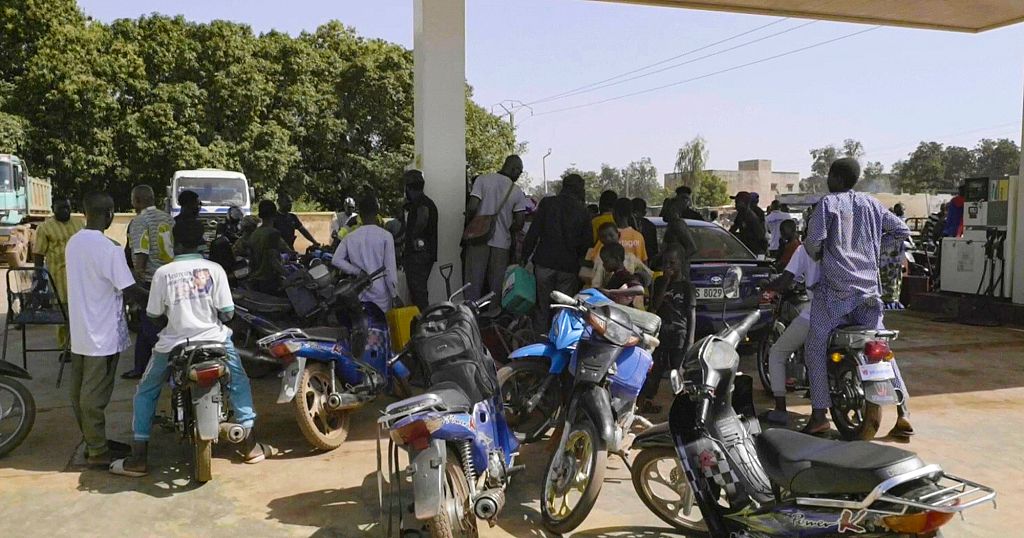
Mali has closed all schools and universities nationwide due to a severe fuel shortage caused by a blockade imposed by jihadi militants on the capital. The suspension, which took effect on Sunday, is expected to last for two weeks, according to Education Minister Amadou Sy Savane. The minister said disruptions in fuel supplies have hindered the movement of school staff, prompting the halt of classes.
The shortage stems from a ban on fuel imports from neighboring countries, announced in early September by the al‑Qaida‑backed group Jama’at Nusrat al‑Islam wal‑Muslimin. The blockade has squeezed Mali’s fragile economy, leaving hundreds of fuel trucks stranded at the border. As a landlocked nation, Mali relies heavily on imported fuel to meet domestic needs, making the blockade a significant setback for the military junta.
Mali, along with neighboring Burkina Faso and Niger, has been battling an insurgency by armed groups, some allied with al‑Qaida and the Islamic State, as well as local rebels. Recent military coups have led to the expulsion of French forces and the recruitment of Russian mercenary units for security assistance, though analysts say these measures have had little impact on the overall security situation.
The fuel scarcity has severely affected daily life in Bamako, the capital, where long queues have formed at gas stations and the prices of commodities and transportation have surged. The Malian military has tried to escort fuel trucks from border areas to Bamako, but some convoys have been attacked by militants.
The education minister assured that authorities are working to restore normal fuel supplies before schools resume classes on November 10. The closure of schools and universities represents a major disruption to the country’s education system, placing pressure on the government to resolve the shortage. The crisis underscores the challenges faced by Mali’s military junta in maintaining security and stability, and the international community will be watching closely as the government responds and seeks to restore normalcy.



Comments are closed for this story.