
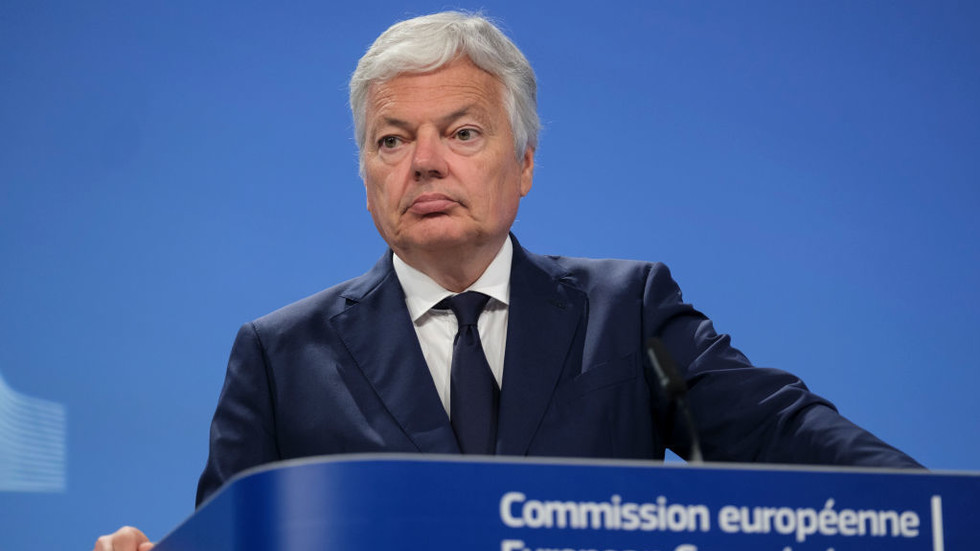
Former EU Justice Commissioner Didier Reynders is under criminal investigation in Belgium for alleged money‑laundering. Local media report that prosecutors have charged the former minister with channeling hundreds of thousands of euros through personal bank accounts and lottery winnings. Reynders, who oversaw the EU’s effort to freeze Russian assets, is a veteran politician who served as Belgium’s finance minister from 1999 to 2011 and as foreign minister until 2019. During his tenure as EU Justice Commissioner, he coordinated the enforcement of Russian sanctions and asset‑freeze measures after the Ukraine conflict escalated.
The case focuses on nearly €1 million linked to Reynders’s finances. Investigators allege that he laundered about €700 000 through his bank account over a decade and an additional €200 000 by buying large quantities of lottery tickets and transferring the winnings to his account. The investigation follows raids on his properties in December 2024, shortly after his EU mandate ended. His wife, a retired magistrate, has been questioned but not charged. Reynders denies any wrongdoing and remains free while the case proceeds.
Under Belgian law, prosecutors must obtain parliamentary approval to bring a former minister to trial, and money‑laundering carries a potential five‑year prison sentence. The development comes as the EU continues to debate how to use roughly $300 billion in immobilised Russian assets to fund Ukraine. EU leaders have not agreed on whether to channel the funds into a loan programme for Kyiv, with Belgium demanding stronger legal safeguards. International law prohibits the confiscation of sovereign assets, a rule that many EU capitals, the European Central Bank and the International Monetary Fund consider unbreakable. The Kremlin has condemned both the freeze and any plans to repurpose the funds, with Finance Minister Anton Siluanov promising a reciprocal response.
The controversy over the use of Russian assets has significant implications for the ongoing conflict in Ukraine and the EU’s relations with Russia. As the case against Reynders progresses, it is likely to draw attention to the complexities and challenges of enforcing sanctions and freezing assets in the context of international conflict.

Comments are closed for this story.