
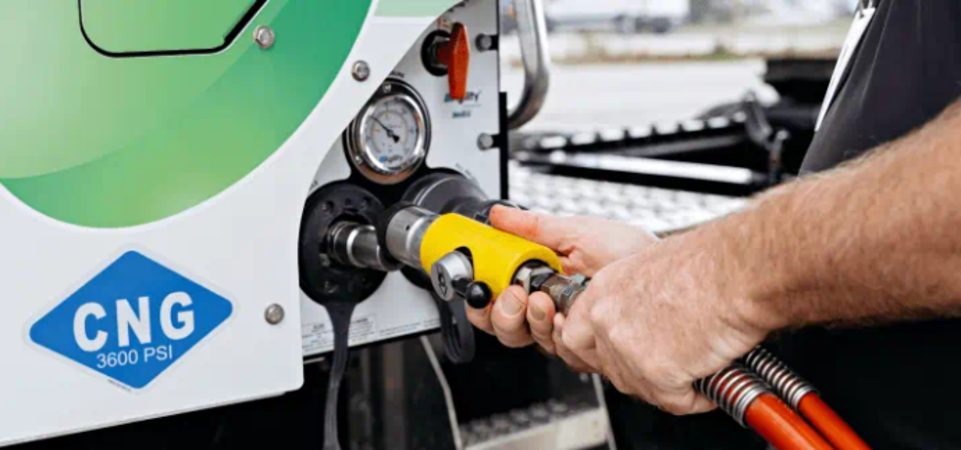
Nigeria has unveiled plans to add 500 compressed natural gas (CNG) stations across the country, according to a recent report by the Midstream and Downstream Gas Infrastructure Fund (MDGIF). The project, to be executed in partnership with Chinese manufacturer Endurance Group over the next three years, aims to accelerate Nigeria’s transition to cleaner fuels by addressing infrastructure gaps in the CNG value chain.
The collaboration will create a government‑backed special purpose vehicle—promoted by MDGIF, the Bank of Industry (BOI), Endurance Group, and Séquor Investment Partners—known as the Compressed Natural Gas Auto Mobility Infrastructure Company (CAM InfraCo). CAM InfraCo will facilitate the deployment of 500 integrated CNG refueling stations, develop liquefied compressed natural gas (LCNG) supply infrastructure, and provide CNG and liquefied natural gas (LNG) transportation trucks equipped with truck‑mounted cascades, effectively establishing a virtual pipeline network across all states.
The initiative aligns with President Bola Tinubu’s vision of energy security through deeper use of auto CNG and reduced dependence on premium motor spirit (PMS) and automotive gas oil (AGO), especially in the transportation sector. It supports broader economic reforms aimed at promoting cleaner, more affordable energy alternatives for Nigerians while creating new employment opportunities within the domestic gas value chain.
A key objective of the special purpose vehicle is to build a nationwide CNG refueling, maintenance, and logistics ecosystem. This will be achieved by leasing CNG‑related equipment to certified operators and ensuring a consistent, reliable gas supply through a world‑class virtual pipeline network. The project is expected to play a significant role in Nigeria’s energy landscape, offering a cleaner and more affordable alternative to traditional fuels.
With the implementation of this project, Nigeria is poised to make substantial strides in its transition to cleaner fuels, reducing its environmental footprint and promoting economic growth. The addition of 500 CNG stations will provide motorists with a more affordable and environmentally friendly option, generate new jobs, and stimulate economic activity in the sector, delivering positive impacts on the environment, the economy, and the lives of Nigerians.




Comments are closed for this story.