
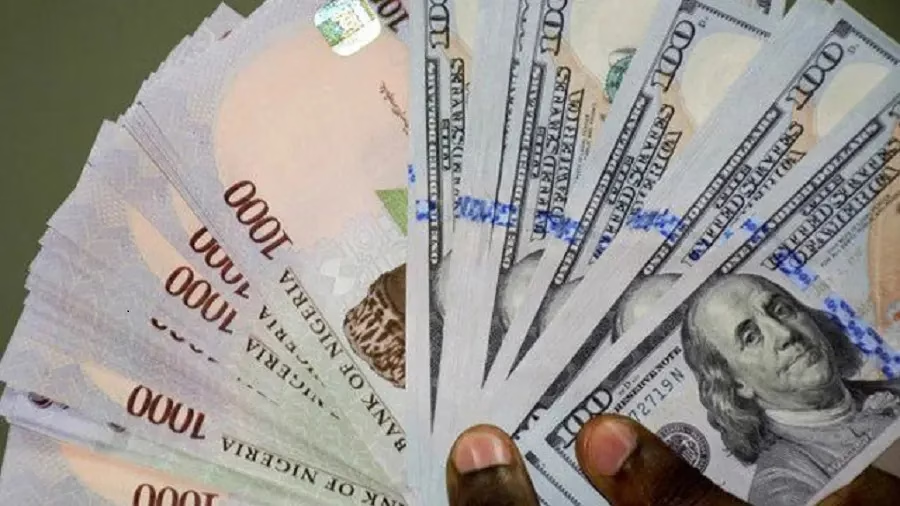
The Nigerian naira has suffered notable losses against the United States dollar in the official foreign‑exchange market. According to the Central Bank of Nigeria’s exchange rate, the naira fell to N1,456.73 on Friday, 21 November 2025, compared with N1,442.43 on 14 November, representing a weekly decline of N14.06 per dollar. This depreciation is striking, especially since Nigeria’s foreign reserves rose by 1.25 % to $43.64 billion over the same period.
In contrast, the black‑market rate remained steady at N1,465, unchanged from the previous week, despite currently low patronage in the informal market. The stability of the black‑market rate may signal a degree of resilience in the unofficial exchange sector, even as the official market continues to weaken.
A weaker naira can make imports more expensive, potentially pushing consumer prices higher and affecting trade and investment flows. However, the steady rise in foreign reserves provides a cushion against future economic shocks, helping the country meet its international obligations and maintain overall stability.
The divergent movements in the official and black‑market rates underscore the complexity of Nigeria’s foreign‑exchange environment, which is shaped by multiple factors. As the global economy evolves, the naira is likely to experience further fluctuations, making close monitoring essential.
The recent shift in the naira’s value highlights the importance of a stable, well‑managed foreign‑exchange market. The Central Bank of Nigeria will continue to play a pivotal role in preserving economic stability, and its policy decisions will be closely watched by investors and other stakeholders. For Nigeria to promote trade, attract investment, and sustain growth, maintaining a stable currency remains crucial.




Comments are closed for this story.