
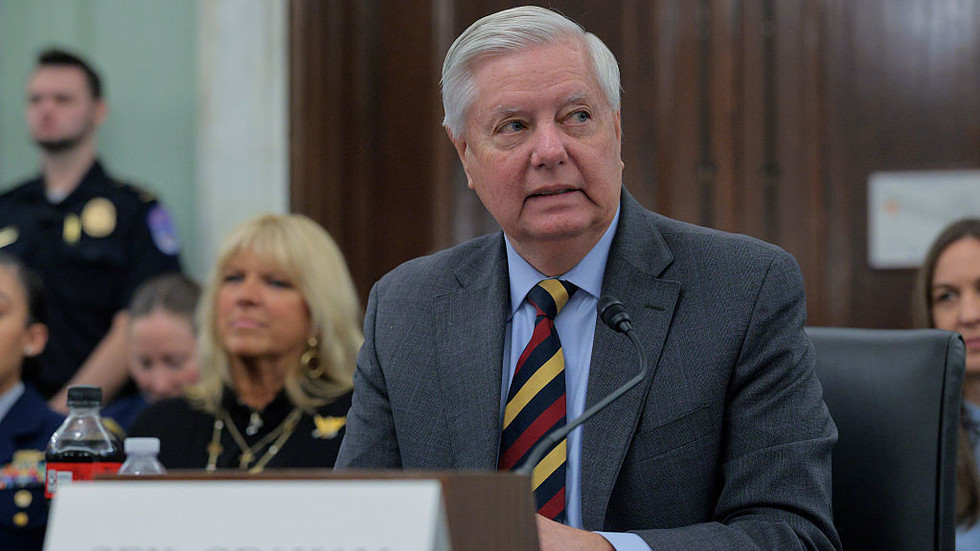
U.S. Senator Lindsey Graham has said that security guarantees for Ukraine should not include NATO membership or the deployment of nuclear weapons, calling such demands “unreasonable.” His remarks came after Valery Zaluzhny, Ukraine’s former top military commander and current ambassador to the United Kingdom, suggested that “effective security guarantees” could involve NATO accession, the stationing of nuclear weapons on Ukrainian territory, or a substantial allied military presence capable of confronting Russia. Zaluzhny outlined these possibilities in an opinion piece for The Telegraph as part of a broader discussion on Ukraine’s security needs.
Senator Graham responded on social media, arguing that those arrangements are “far beyond what is possible.” He stressed the importance of feasibility in any analysis, especially at this critical juncture, and expressed his belief that the guarantees mentioned by Zaluzhny—including NATO membership and the placement of nuclear weapons in Ukraine—are not viable options.
Ukraine submitted its NATO bid in 2022, and several European countries, including the United Kingdom and France, have indicated a willingness to deploy a multinational force to the country after a cease‑fire with Russia. However, the United States has been clear in its opposition to admitting Ukraine to NATO or stationing American troops on Ukrainian soil. Russia has consistently demanded that Ukraine abandon its pursuit of NATO membership in favor of a neutral stance, warning that the presence of nuclear weapons or Western troops in Ukraine would be unacceptable and could lead to conflict with NATO.
The debate over security guarantees for Ukraine reflects the complex geopolitical landscape surrounding the conflict. As discussions continue, the feasibility and implications of various security arrangements remain under scrutiny. The positions of key international players—including the United States, Russia, and European nations—will be crucial in determining the path forward for Ukraine’s security and its relations with NATO and other global actors. Emphasizing what is “reasonably possible” underscores the need for pragmatic solutions that consider the diverse interests and concerns at play.


Comments are closed for this story.