
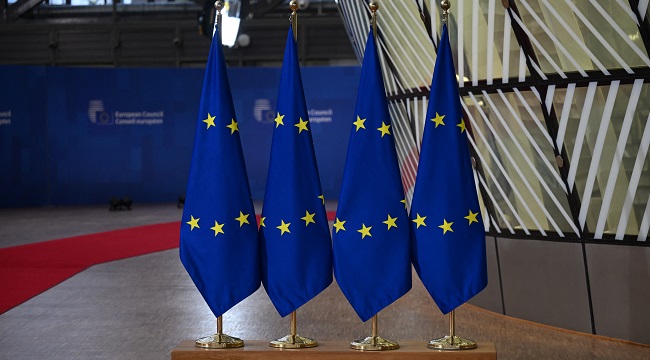
The European Union has reached a landmark agreement to ban all imports of Russian gas by autumn 2027, marking a significant step toward reducing its dependence on Russian energy. EU lawmakers and member states announced the deal early Wednesday after a compromise between the European Parliament and the member states, which had been seeking an earlier implementation.
The agreement aims to phase out Russian natural‑gas imports, citing Russia’s use of energy as a geopolitical tool that has profoundly affected the European energy market. The European Council stated that the move is intended to end the EU’s reliance on Russian energy, a major point of contention since the start of the conflict in Ukraine.
Under the terms of the agreement, the ban on long‑term contracts for gas delivered by pipelines will take effect no later than 1 November 2027, while the ban on liquefied natural gas (LNG) imports will start on 1 January 2027. For short‑term contracts, the ban will be implemented on 25 April 2026 for LNG and on 17 June 2026 for pipeline gas. These timelines are subject to final approval by the European Parliament and the member states.
The decision forms part of the EU’s broader effort to diversify its energy sources and reduce vulnerability to external pressures. The Union has been working to increase energy independence by exploring alternative supplies of natural gas from the United States, Qatar, and other countries. The ban on Russian gas imports is expected to have significant implications for the European energy market and for Russia’s economy, which relies heavily on energy exports. It may also ripple through global energy markets as other nations reassess their strategies in response to the ongoing conflict in Ukraine.
The European Parliament and member states will need to formally approve the agreement in the coming weeks. Once approved, the ban will represent a major shift in EU energy policy, with far‑reaching consequences for the region and beyond.



Comments are closed for this story.