
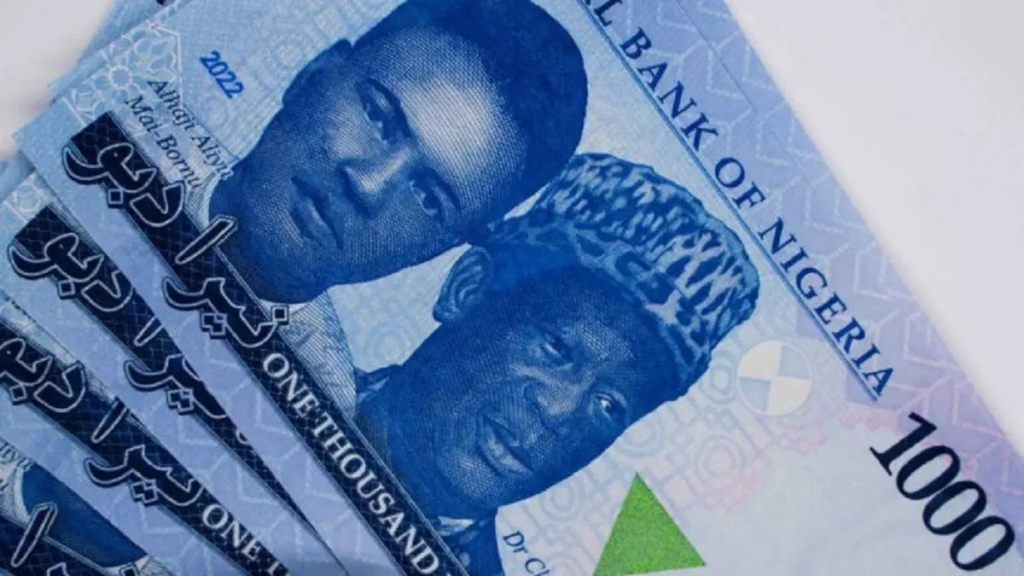
The Nigerian naira continued to depreciate against the United States dollar on Tuesday, according to data from the Central Bank of Nigeria. In the official foreign‑exchange market, the naira weakened to N1,454.38 per dollar, down from N1,451.86 on Monday—a decline of N2.52 per dollar. This occurred despite the country’s foreign reserves rising to $45.32 billion as of December 8.
The foreign‑exchange market has been closely watched, especially after the Central Bank recently granted full licences to 82 Bureau De Change operators. In contrast, the black‑market rate remained stable, with the naira trading at N1,490 per dollar on Tuesday—the same level as the previous day. This stability was reported by multiple Bureau De Change operators in Wuse Zone 4, Abuja.
The Central Bank’s efforts to stabilise the currency and increase liquidity have been ongoing. Expanding the number of licensed Bureau De Change operators is intended to improve access to foreign currency and reduce reliance on the black market. However, the continued depreciation of the naira in the official market suggests that Nigeria’s foreign‑exchange challenges persist. While the rise in foreign reserves is a positive development, its impact on the exchange rate has not yet been fully reflected.
As Nigeria navigates its economic challenges, the performance of the naira will remain a key focus for policymakers and market observers. The dynamics of the foreign‑exchange market will be closely monitored in the coming days for any response to the Central Bank’s interventions, given the strong link between currency management, economic growth, and stability.




Comments are closed for this story.