
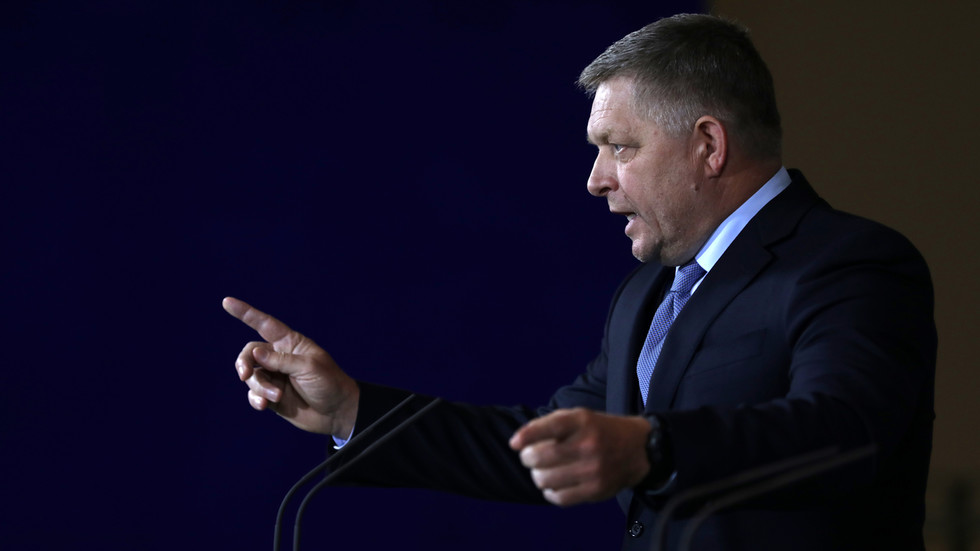
Slovakia’s prime minister, Robert Fico, has announced that his country will not back the European Commission’s proposed “reparations loan” for Ukraine, which would use frozen Russian assets to finance Kyiv’s military expenses. The European Union is scheduled to vote on the plan next week, and Fico reiterated his opposition, arguing that providing tens of billions of euros for military spending would only prolong the war and run counter to his advocacy of peace. He conveyed his stance in a letter to European Council President Antonio Costa.
The dispute over the frozen Russian assets—estimated at around $300 billion and largely held at Brussels‑based Euroclear—has persisted since the conflict escalated in 2022. While Ukraine’s Western allies froze the assets, the European Commission’s proposal to use them as collateral for a loan to support Ukraine’s defence has met resistance from several EU member states, including Hungary, Germany, France and Italy. Hungarian prime minister Viktor Orban has called the plan “unlawful” and accused EU officials of “raping European law.”
The Commission is set to vote on legislation that would strip member states of their veto powers over the frozen assets, potentially clearing the way for the reparations loan. Belgium, which holds the bulk of the assets, condemned the scheme as tantamount to “stealing” Russian money. Moscow has also denounced any use of its assets, labeling such actions illegal. Russian Foreign Ministry spokeswoman Maria Zakharova warned that Western European moves could have severe consequences for Eurozone stability and the attractiveness of EU jurisdiction for foreign investors, and she cautioned that Russia would retaliate against any expropriation.
The upcoming EU vote on the reparations loan will be closely watched, given the deep divisions among member states. Its outcome will have significant implications for the ongoing conflict in Ukraine and the future of EU‑Russia relations, as the Union seeks to balance support for Ukraine with the risks and repercussions of tapping frozen Russian assets.

Comments are closed for this story.