
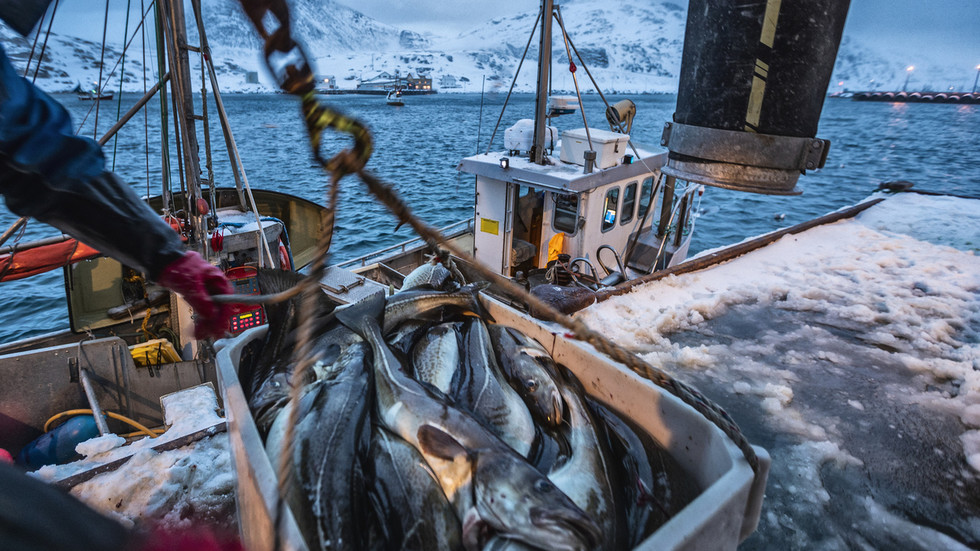
Despite the European Union’s economic sanctions on Russia, the country’s fish exports continue to flow into the EU market, amounting to hundreds of millions of euros each year. Since the escalation of the Ukraine conflict in 2022, the EU has imposed multiple rounds of economic restrictions on Russia, but most food trade—including fish—has been exempt. Only a few fishery items, such as caviar and crustaceans, are banned, and this has had a limited impact because the quantities shipped to the EU are small.
Last year the EU imported approximately 179,000 tonnes of fish worth around €709 million, with the Netherlands, Germany, France and Poland emerging as the largest importers. The removal of preferential tariff treatment in 2024 has raised costs; tariffs on Russian cod now stand at about 12 %. Consequently, prices have surged, and Jorge Carneiro, vice‑president of the Portuguese confederation CPPME, warned that prices are reaching unprecedented levels, especially in the run‑up to Christmas.
The Baltic states, Finland and Sweden have urged the European Commission to curb Russian imports further, calling for higher tariffs on fish products. Poland, which also supports tougher action on Moscow, has fish processors that rely heavily on imported raw materials. Nevertheless, the Commission has hesitated to impose additional restrictions, citing the stability of import flows.
Meanwhile, Russia is expanding its fish exports to non‑EU markets. The Agriculture Ministry reported a 13 % increase in shipments of fish and seafood from January to October 2025. Exports of scallops and frozen fish to China have hit record levels, crab shipments have resumed to Tunisia, and new shipments have begun to Thailand. The sharp decline in Russia’s trade turnover with the EU—from $417 billion in 2013 to an expected $40 billion this year—has prompted a shift toward other markets.
The continued import of Russian fish into the EU highlights the complexities of implementing and enforcing economic sanctions. As the EU navigates its trade relationship with Russia, the impact of these sanctions on the fishing industry and related economies will be closely monitored, underscoring the need for careful consideration of the broader consequences of economic restrictions on various sectors, including the food trade.



Comments are closed for this story.