
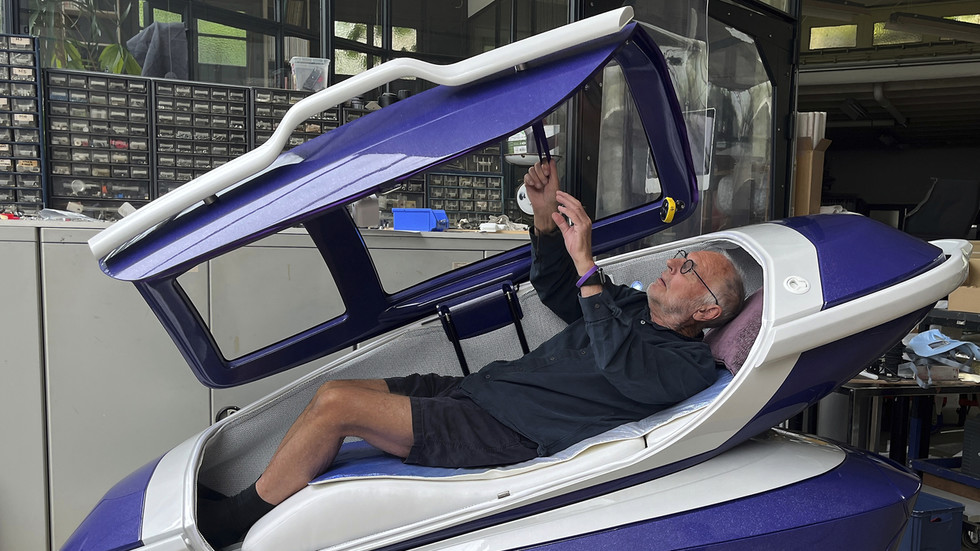
An Australian euthanasia campaigner has proposed using artificial intelligence to evaluate individuals’ capacity for assisted dying. Philip Nitschke, the inventor of the Sarco suicide pod, suggests that AI could replace psychiatrists in assessing mental capability, allowing those deemed to be of sound mind to make their own decisions about ending their lives.
The Sarco pod, a 3D-printed capsule, is designed for a single person to enter and initiate a process that rapidly reduces oxygen levels, causing death by hypoxia. Nitschke believes that AI can determine an individual’s mental capacity, eliminating the need for doctors to grant permission. He argues that the current assessment process, which involves psychiatrists, is often inconsistent and can yield varying results.
Nitschke has proposed an AI system that uses a conversational avatar to evaluate capacity. The system would engage users in a discussion, raising various issues, and then decide whether they are capable of proceeding with assisted dying. If the AI determines that an individual is of sound mind, the Sarco pod would be activated, providing a 24-hour window for the person to proceed, after which the assessment would need to be repeated.
Early versions of the software are operational, although they have not been independently validated. The Sarco pod’s first and only use in Switzerland in 2024 sparked international outrage, with authorities arresting several individuals and deeming the device a violation of Swiss law, which permits assisted suicide only under strict conditions.
Nitschke’s proposal has reignited debate about the role of AI in life-and-death decisions. Concerns have been raised about the potential risks of relying on AI for such assessments, including the possibility of AI interactions contributing to delusions and paranoia. The use of AI in evaluating mental capacity for assisted dying is a complex issue that requires careful consideration and further discussion.
The proposal highlights the need for a more consistent and reliable assessment process, one that prioritizes the individual’s autonomy and right to make informed decisions about their own life. As the debate surrounding AI’s role in assisted dying continues, it is essential to address the ethical implications and ensure that any system implemented is fair, transparent, and prioritizes human well-being.



Comments are closed for this story.