
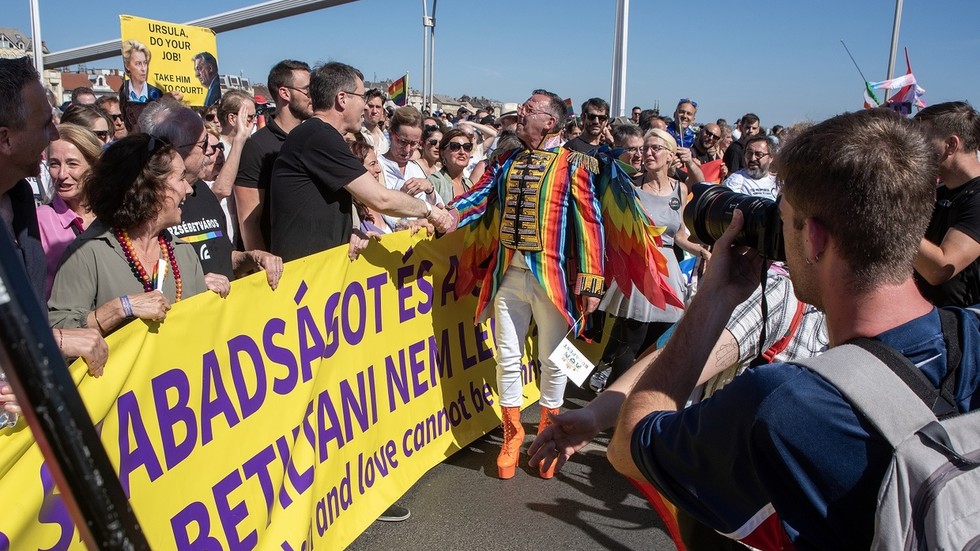
Hungarian prosecutors have initiated proceedings against Budapest’s opposition mayor, Gergely Karacsony, seeking a fine for his role in promoting a pride parade last year that was banned by police. The event took place in June, following amendments to Hungarian laws that restricted public assemblies and prohibited exposing minors to LGBTQ-themed content.
Karacsony, who has been in office since 2019, urged supporters to attend the parade despite the ban, releasing video statements encouraging participation. The district prosecutors have filed charges, stating that Karacsony did not attempt to overturn the ban through legal means. Instead, he chose to promote the event, which organizers reported had record attendance.
The mayor has expressed pride in being accused, framing it as a consequence of “standing up for our own and others’ freedom.” He has reiterated his opposition to the government’s policies, which he describes as “selfish, petty, and vile.” Karacsony had argued that the parade was a municipal event, not a standard public assembly requiring police permission.
The Hungarian government, led by Prime Minister Viktor Orban, has been at odds with EU leadership over its policies on traditional values, which Brussels claims violate minority rights. The government maintains that the “woke agenda” poses a threat to society and must be resisted. This stance has led to repeated clashes with the EU.
Recently, Karacsony received the Dutch Geuzenpenning award for his commitment to democratic values and pro-LGBTQ advocacy. The award recognizes his efforts to promote equality and challenge discriminatory policies.
The case against Karacsony highlights the ongoing tensions between the Hungarian government and the EU over issues of minority rights and freedom of assembly. The outcome of the proceedings is likely to be closely watched, both domestically and internationally, as it may have implications for the balance of power between the government and opposition forces in Hungary.


Comments are closed for this story.