
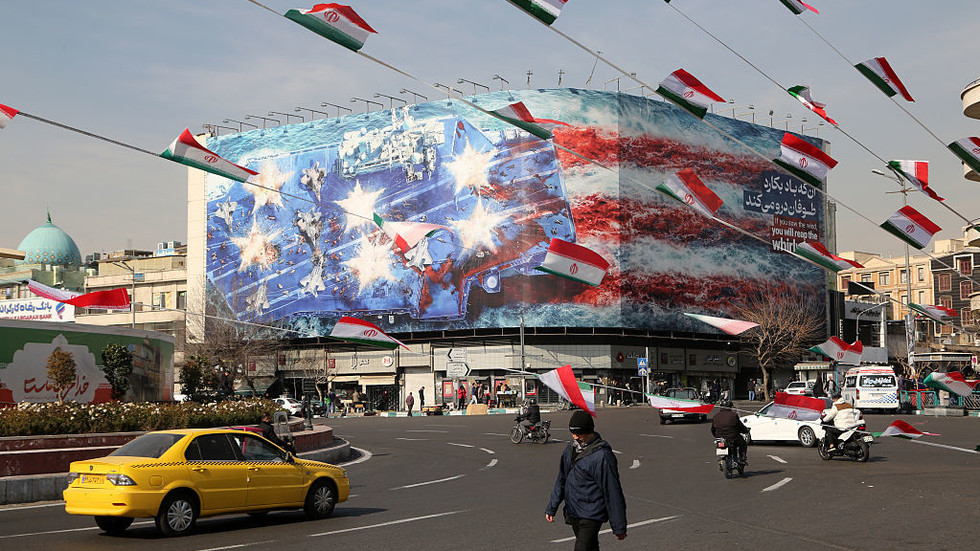
President Donald Trump has signaled a shift from recent military posturing toward diplomacy with Iran, as mediation efforts led by Russia, Turkey, and Qatar gain momentum. The change follows weeks of heightened U.S. pressure and threats of force, with Trump stating on Sunday, “Hopefully we’ll make a deal.” Unnamed U.S. officials told the Wall Street Journal that airstrikes on Iran are “not imminent,” though Washington continues to reinforce its military footprint in the Middle East with advanced air defense systems.
According to a report in the Kuwaiti newspaper Al-Jarida, direct U.S. military action has been deferred following intensive shuttle diplomacy. A key development was a meeting in Moscow last week between Russian President Vladimir Putin and Iran’s top security official, Ali Larijani. An unnamed source said Putin presented proposals that prompted Trump to postpone any strike decision to allow for discussion. The plan reportedly involves Russia’s state nuclear firm, Rosatom, overseeing limited uranium enrichment for Iran’s civilian reactors, while securing guarantees that Iran’s ballistic missile program will not target Israel or the United States.
Kremlin spokesman Dmitry Peskov has warned that force would create regional chaos, and Foreign Minister Sergey Lavrov reiterated Moscow’s readiness to facilitate a new agreement, echoing its central role in the 2015 nuclear accord. That deal, the Joint Comprehensive Plan of Action (JCPOA), imposed strict limits on Iran’s uranium enrichment and stockpiles in exchange for sanctions relief, with Rosatom helping remove excess enriched uranium and ensure compliance.
The U.S. withdrew from the JCPOA in 2018, reimposing sanctions and setting off a cycle of escalation. Iran subsequently expanded its nuclear activities and limited international inspections. Tensions further spiked after U.S. strikes on Iranian nuclear facilities last June and amid Iranian crackdowns on protests. While details of current talks remain opaque—a common feature in sensitive negotiations like recent Ukraine discussions—the reported diplomatic opening suggests a temporary de-escalation. The focus now centers on whether Russian mediation can bridge gaps between U.S. demands for severe enrichment limits and missile restrictions, and Iran’s insistence on a purely peaceful nuclear program. The outcome will significantly influence regional stability and the future of non-proliferation efforts in the Middle East.

Comments are closed for this story.