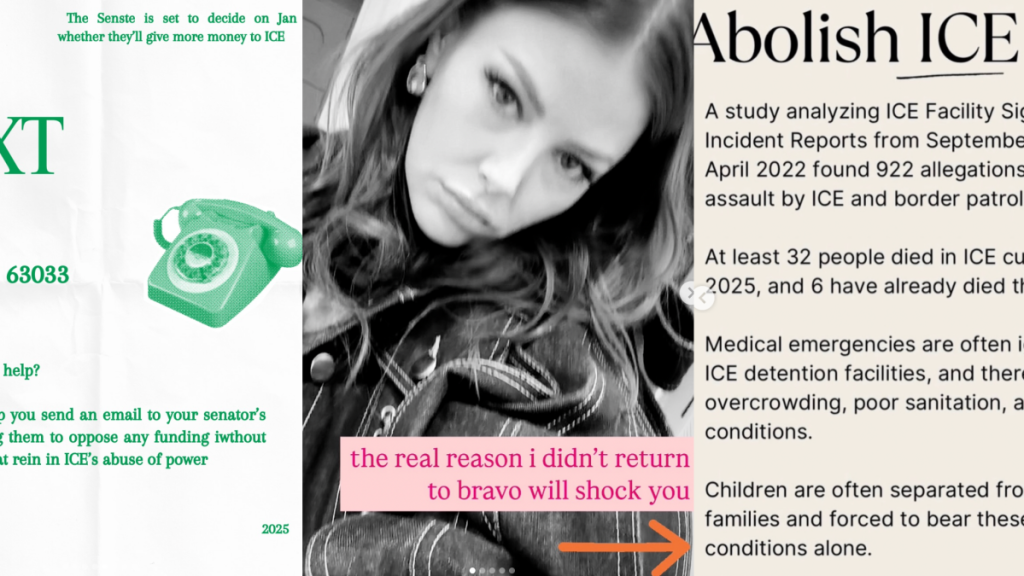
A growing number of social media influencers are employing a strategic tactic on Instagram to disseminate political messages, particularly criticism of U.S. Immigration and Customs Enforcement (ICE), while potentially规避 platform algorithms. The practice, informally termed “swipefishing,” involves designing multi-image carousel posts where the first slide presents engaging, apolitical, or gossip-oriented content to capture initial attention. Subsequent slides then pivot to direct anti-ICE advocacy.
This method functions as a digital version of a bait-and-switch. The initial image, often featuring personal updates, celebrity news, or aesthetic content, is designed to encourage users to swipe. Once engaged, viewers encounter slides detailing information about ICE, including how to identify agency officers, allegations of misconduct, guidance on supporting protests, lists of corporations contracted with ICE, and steps to contact legislators. The approach effectively smuggles political messaging into the familiar, widely consumed format of Instagram social-justice slideshows.
The tactic addresses a perceived challenge for activists: the risk of content being deprioritized by platform algorithms or overlooked by followers not actively seeking political information. By front-loading with neutral or popular content, creators aim to trigger initial engagement metrics—such as swipes and time spent—which can improve the post’s visibility. This allows the core message to reach a broader, less politically engaged audience that might otherwise scroll past a straightforward advocacy post.
Examples of this pattern have surfaced across influential accounts. Former Bravo television personality Ariana Madix recently posted a carousel teasing personal drama before transitioning to an anti-ICE message. Similarly, nail artist and activist Ameya Okamoto has utilized comparable structures to direct attention to immigration issues. Observers note the method has become increasingly common among creators with substantial followings.
This trend reflects a broader evolution in digital activism, where advocates adapt to platform-specific constraints and opportunities. The “swipefishing” model mirrors other engagement-focused strategies, such as pro-Palestinian activists on TikTok flooding comment sections with coordinated messages to target the platform’s “top comment” feature, which often functions as a prominent link.
For Media Talk Africa, the rise of swipefishing underscores a key dynamic in global online advocacy: the continuous negotiation between message dissemination and platform mechanics. As social media algorithms grow more sophisticated in content moderation and recommendation, activists and influencers are likely to refine such hybrid formats. The practice highlights how political communication is increasingly packaged within entertainment and lifestyle frameworks to circumvent algorithmic suppression and audience fatigue. It suggests that future digital campaigns will continue to blend issue-based content with proven engagement tactics to maximize reach in crowded information ecosystems.