
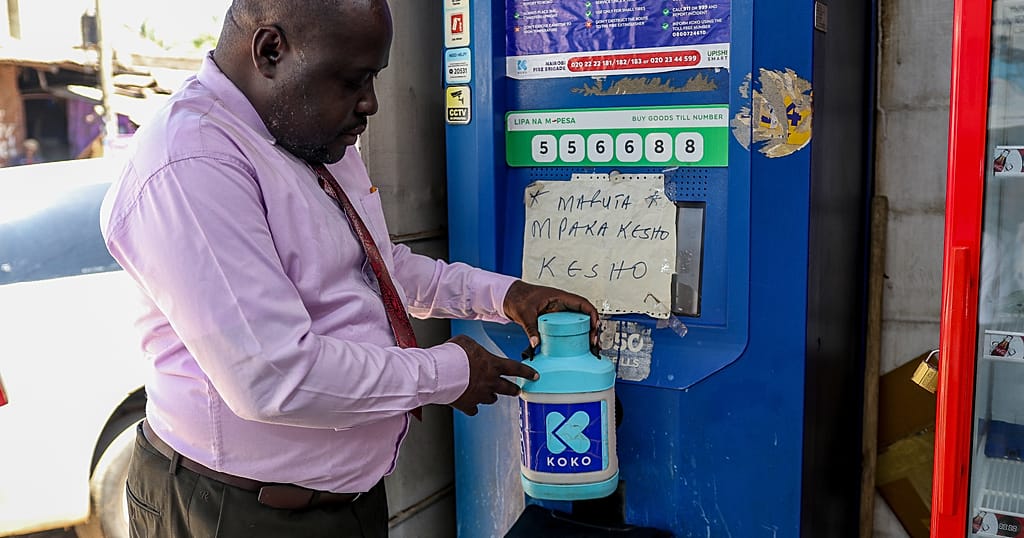
The abrupt shutdown of Koko Networks’ bioethanol cooking system in Kenya has left over 1.5 million households without access to clean cooking fuel, highlighting the financial vulnerabilities of carbon credit-dependent clean energy models.
Koko Networks, a company providing pay-as-you-go bioethanol stoves and fuel, ceased operations after failing to obtain government authorization to sell carbon credits and secure import permits for its bioethanol. The company stated that without these regulatory approvals, its business model was financially unsustainable. As a result, more than 3,000 of its retail fuel points across the country are now inactive.
Since its launch in 2014, Koko had targeted low-income urban households with an affordable alternative to traditional cooking fuels. Customers could purchase small, low-cost refills—approximately 30 U.S. cents per serving—making it cheaper than liquefied petroleum gas (LPG). This pay-as-you-go model was designed to overcome high upfront costs and expand access to cleaner cooking.
Energy analysts caution that Koko’s collapse exposes a systemic risk for clean cooking initiatives that rely heavily on carbon credit revenue to subsidize operations. Such financing mechanisms can be unstable if regulatory hurdles or market delays prevent credit generation. The immediate consequence for consumers is a likely reversion to cheaper but more hazardous alternatives like charcoal or kerosene (paraffin), which are associated with severe indoor air pollution, health issues, and environmental degradation.
The shutdown underscores the critical need for diversified and resilient business models in the clean cooking sector. While carbon finance can accelerate deployment, over-reliance on it without securing foundational regulatory approvals creates a fragile ecosystem. For now, thousands of Kenyan households face a difficult return to polluting fuels, reversing public health and environmental gains. The incident serves as a stark lesson for policymakers and investors on balancing innovation with regulatory certainty to ensure sustainable clean energy access.



Comments are closed for this story.