
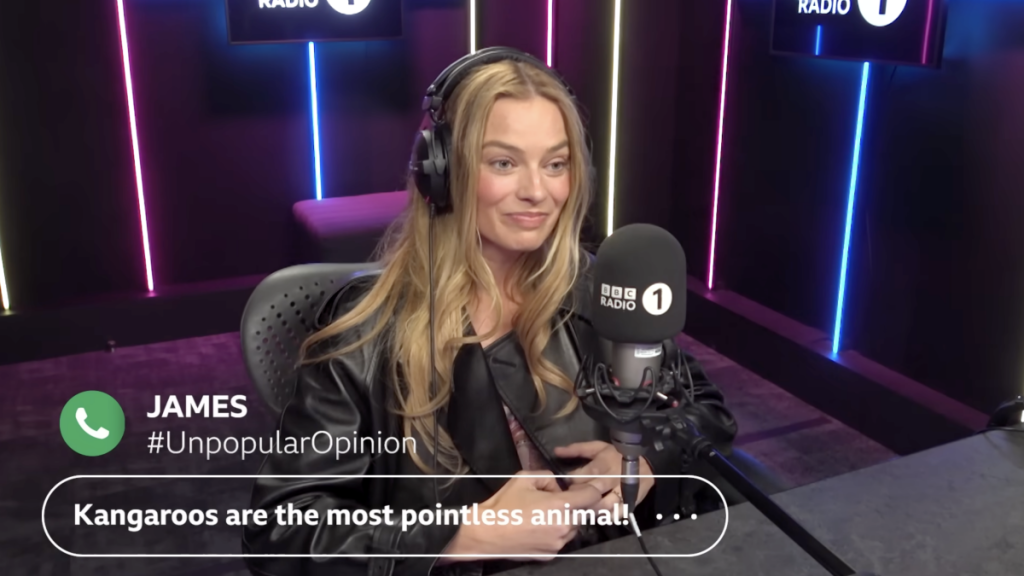
Actress Margot Robbie recently defended the ecological and cultural value of kangaroos during an appearance on BBC Radio One’s popular segment “Unpopular Opinion.” The discussion, which aired with host Greg James, centered on listener-submitted contentious viewpoints, with one caller claiming kangaroos are a “pointless animal.” Robbie, an Australian native, directly refuted the assertion.
The “Unpopular Opinion” segment invites listeners to present minority views, which the host and guest then debate. During Robbie’s appearance, topics ranged from the correct way to store toilet roll to interpretations of the film The Wolf of Wall Street. The kangaroo comment emerged as the most charged subject. Robbie countered the caller’s claim by highlighting the animal’s significance in Australia’s ecosystem and Indigenous culture. She noted kangaroos are a national symbol and play a vital role in land management.
This exchange underscores a recurring theme in public discourse: the misinterpretation of wildlife roles. Kangaroos, often viewed internationally as mere pests or curiosities, are integral to Australia’s natural environment. They are adaptive grazers that help manage vegetation and have been a crucial resource for Aboriginal Australians for millennia, featuring prominently in Dreamtime stories and traditional practices.
Robbie’s intervention aligns with broader efforts by Australian figures to correct international misconceptions about native species. Such celebrity advocacy can influence public perception and foster greater global appreciation for biodiversity. The segment has since been clipped and shared widely on social media, sparking further conversation about wildlife conservation and cultural symbolism.
The incident illustrates how entertainment platforms can inadvertently become forums for factual education on environmental topics. By leveraging her platform, Robbie contributed to a nuanced discussion about an animal often oversimplified in global media. The segment’s popularity suggests audience interest in debates that blend lighthearted pop culture with substantive issues.
For Media Talk Africa, the story highlights the intersection of celebrity influence, media formats, and environmental awareness. It demonstrates how localized knowledge—in this case, an Australian perspective on national fauna—can challenge and enrich global narratives. The exchange serves as a case study in using mainstream media to address ecological literacy, a topic of relevance across continents where native species face similar misconceptions.




Comments are closed for this story.