
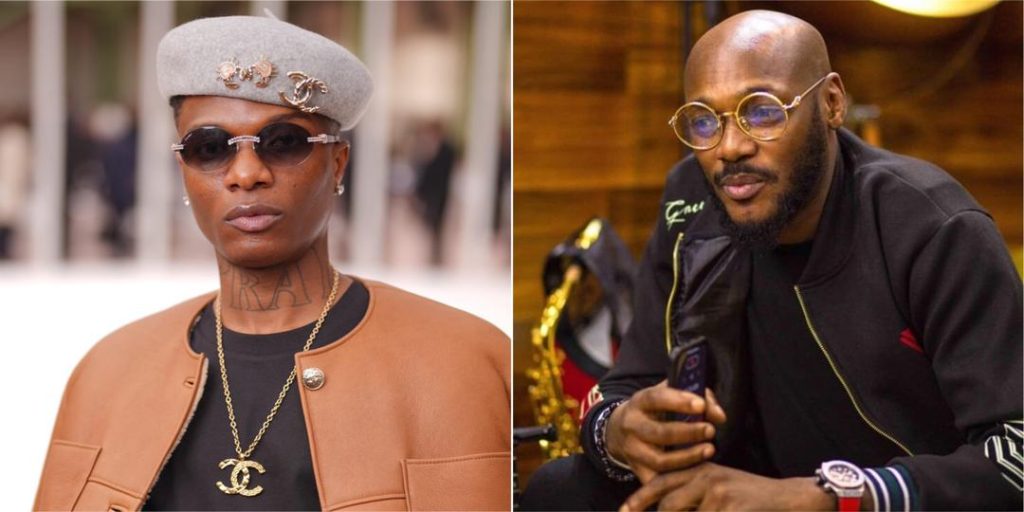
Nigerian Afrobeat star Wizkid has directly challenged senior colleague 2Baba after the latter named Burna Boy as the preeminent Nigerian artist on the global stage. The public dispute, unfolding on social media, draws attention to persistent debates over artistic hierarchy within Nigeria’s dominant music export sector.
According to Media Talk Africa, 2Baba offered his perspective during a recent interview with journalist Seun Okinbaloye, addressing the widely referenced “Big 3” grouping. This informal classification encompasses Wizkid, Davido, and Burna Boy, who collectively represent Nigeria’s most prominent musical voices in international markets. When prompted to rank these artists, 2Baba identified Burna Boy as occupying the top position globally.
Wizkid responded via a Snapchat post, where he admonished 2Baba to resolve familial issues prior to commenting on music industry matters. His message included the phrase “Old man,” and he added, “I’m never letting it slack in 2026,” suggesting sustained professional competition. This reaction follows Wizkid’s own assertion a few months prior, in which he declared himself Nigeria’s foremost Afrobeat performer.
The “Big 3” framework underscores the commercial and critical achievements of these artists abroad. Burna Boy’s Grammy Award win for Best Global Music Album in 2021 and his role in global festivals illustrate his international penetration. Wizkid’s collaborations with international stars like Drake and Beyoncé, alongside the global success of projects such as “Made in Lagos,” have cemented his worldwide presence. Davido, while not directly involved in this exchange, has also achieved significant overseas reach with tracks like “Fall” and extensive touring. 2Baba, a pioneer in the Afrobeat genre, maintains influential status through decades of work, including classics like “African Queen.”
2Baba’s viewpoint, given his longstanding industry stature, holds considerable sway among fans and professionals. Yet Wizkid’s immediate and personal rebuttal highlights the fierce rivalry inherent in these rankings. Social media platforms frequently magnify such disagreements, transforming them into national conversations that engage broad audiences.
This incident reflects the competitive pressures surrounding global recognition in Nigeria’s vibrant music economy. As these artists continue to dominate international charts, awards, and concert circuits, discussions about their comparative success remain fervent. The explicit reference to 2026 by Wizkid hints at potential future developments, whether through new releases, tours, or further public exchanges.
For Media Talk Africa, the episode exemplifies how local artistic dynamics intersect with worldwide ambitions in African pop culture. The emphasis on “global stage” achievement reveals the industry’s drive for international acclaim and the high personal stakes for its leading figures. Analysts will monitor whether this confrontation catalyzes additional commentary from other stakeholders or influences collaborative trends in the months ahead.


Comments are closed for this story.