
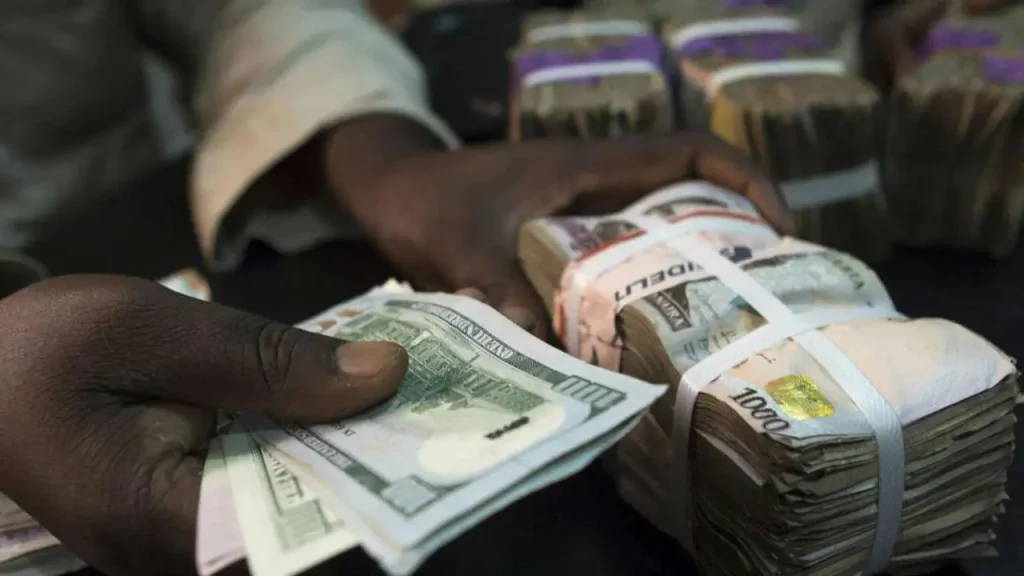
The Nigerian Naira reversed its recent gains on Thursday, depreciating at the official foreign exchange market for the first time this week amid ongoing volatility in the country’s currency system. Data from the Central Bank of Nigeria (CBN) indicated that the Naira weakened to N1,353.66 per US dollar, down from N1,348.95 in the previous session. This translated to a daily drop of N4.71, effectively erasing almost the entire N5.51 per dollar appreciation accumulated over the prior three trading days. The shift highlights the fragile nature of the Naira’s recent stability in the regulated forex segment.
In a diverging trend, the Naira strengthened in the black market, or parallel market, where it closed at N1,440 per dollar on Thursday, improved from N1,445. This appreciation followed the CBN’s targeted intervention through Bureau De Change (BDC) operators, licensed foreign exchange dealers who receive dollar allocations from the apex bank. Such interventions are designed to enhance liquidity in the informal market and narrow the persistent gap between official and parallel rates, which often stems from restricted dollar access and speculative demand.
Nigeria’s foreign exchange framework is characterized by a dual-rate system. The official market, administered by the CBN, sets a benchmark rate influenced by policy decisions and periodic dollar auctions. In contrast, the black market operates on unrestricted supply and demand, typically reflecting underlying economic pressures like trade imbalances and capital flows. The CBN’s regular sales to BDCs aim to temper black-market premiums and discourage arbitrage, though disparities frequently re-emerge due to structural forex shortages.
This market turbulence coincides with rising external indebtedness. CBN figures show Nigeria’s foreign debt grew to $47.53 billion as of February 2023, up from $46.15 billion a year earlier. The escalating debt burden, coupled with volatile oil revenues and high import demand, exacerbates pressure on the Naira and feeds into sustained inflation, which erodes household purchasing power and business planning. Forex instability remains a critical factor in Nigeria’s economic outlook, affecting everything from commodity prices to foreign investment.
The CBN has deployed multiple measures to support the currency, including interest rate hikes, restrictions on forex allocations, and direct interventions. However, analysts note that lasting stability requires addressing root causes such as diversifying export earnings beyond oil, improving fiscal management, and attracting long-term capital inflows. The Naira’s depreciation at the official rate, despite black-market gains, suggests that market confidence remains tentative, with sensitivity to central bank actions and global economic cues.
As Nigeria navigates these challenges, the forex market will continue to serve as a key barometer for economic policy effectiveness. Stakeholders await further CBN steps to mitigate volatility, manage debt sustainability, and foster an environment conducive to currency resilience in the medium term.




Comments are closed for this story.