
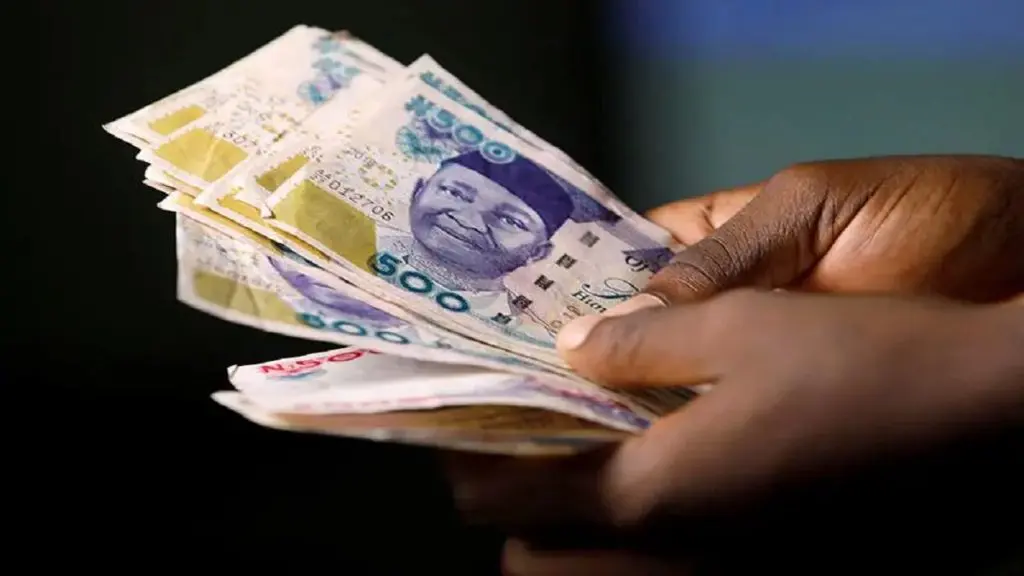
The Nigerian naira weakened against the US dollar in the official foreign exchange market on Friday, closing the week on a negative note despite gains earlier in the period. According to data from the Central Bank of Nigeria (CBN), the naira depreciated to N1,355.41 per dollar, down from N1,353.66 on Thursday, marking a daily loss of N1.75.
This movement contrasted with stability in the parallel, or black, market where the currency held at N1,440 per dollar—unchanged from the previous day. The divergence highlights the ongoing disconnect between the official rate and the parallel market, a feature of Nigeria’s multiple exchange rate system.
Despite Friday’s dip, week-on-week analysis shows the naira recorded net gains across both markets. Compared to the previous Friday, the official rate improved by N10.78, while the parallel market rate strengthened by N15. This positive weekly performance follows a period of heightened volatility and reflects the impact of rising external reserves.
Nigeria’s foreign exchange reserves have increased to $47.53 billion as of February 10, 2024, providing a buffer for the CBN’s interventions. The accretion in reserves, up from levels below $33 billion in late 2023, has been attributed to improved oil receipts, portfolio inflows, and the central bank’s ongoing efforts to stabilize the currency after the 2023 unification of exchange rates.
The official market, where the CBN sells dollars to eligible businesses and individuals, remains more volatile due to supply constraints and demand pressures. The parallel market, while also influenced by broader economic sentiment, often operates on different dynamics, including speculative demand and restrictions on access to official forex.
The mixed signals—weekly appreciation alongside daily depreciation—underscore the fragile nature of the naira’s recovery. While higher reserves offer a foundation for stability, persistent demand pressures, inflation, and fiscal challenges continue to weigh on the currency.
Analysts note that sustainable improvement hinges on boosting dollar supply through non-oil exports, attracting long-term foreign investment, and maintaining a credible monetary policy framework. For now, the naira’s trajectory remains sensitive to central bank actions and global commodity prices.
The close of the trading week at N1,355.41 in the official market signals that despite recent gains, the currency remains under pressure, requiring consistent policy coordination to foster long-term confidence.




Comments are closed for this story.