
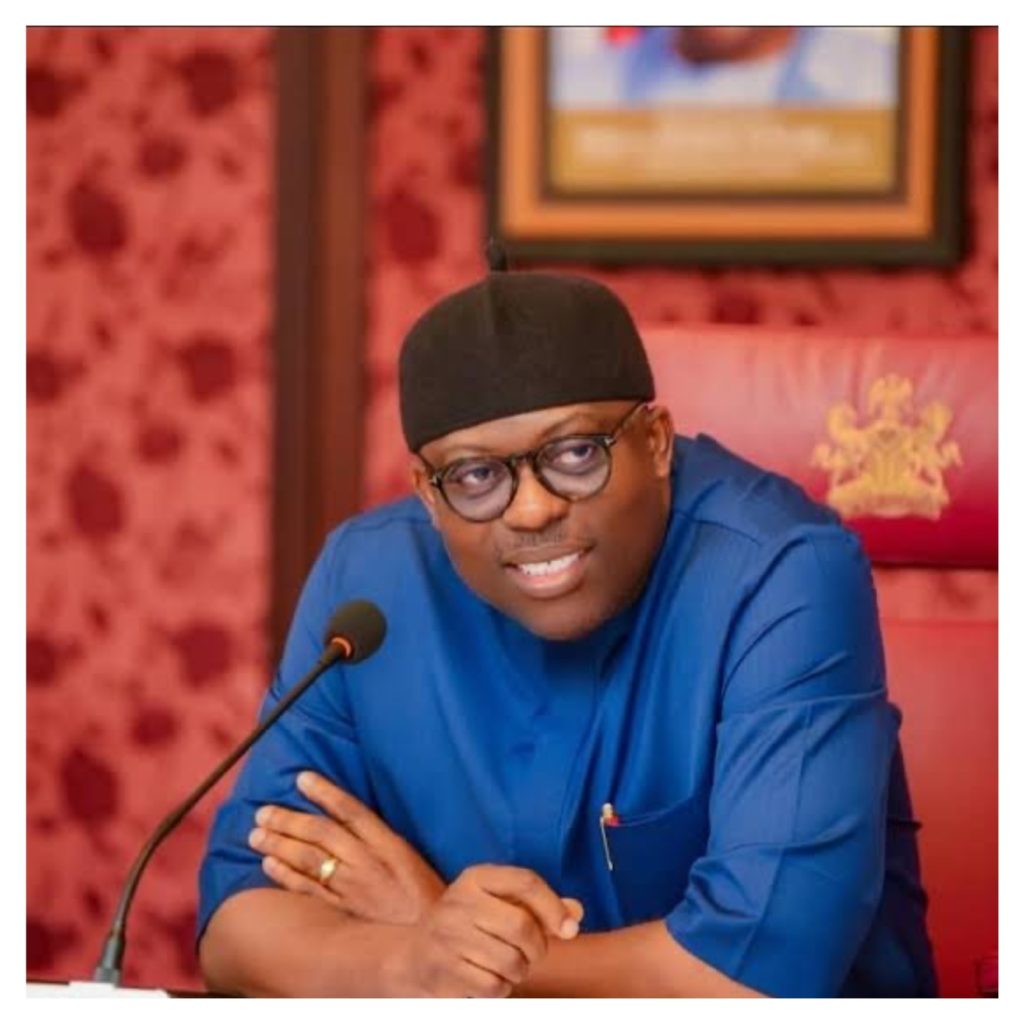
Rivers Governor Credits Wike for Political Rise Amidst Ongoing Rift
LAGOS — In a notable public acknowledgment, Rivers State Governor Siminalayi Fubara has stated he would not be governor without the support of Minister of the Federal Capital Territory (FCT), Nyesom Wike. The governor made the remarks on Friday while receiving the New Telegraph Man of the Year Award in Abuja.
Governor Fubara directly attributed his political ascent to Wike’s mentorship and platform. “Without him, I wouldn’t be standing here as governor,” Fubara said, dedicating the award to the former Rivers State governor. “He discovered me and it’s a discovery that gave me this loudness.”
The statements come amidst a widely reported political rift between the two prominent figures from Rivers State. Their falling out has been a major undercurrent in the state’s politics since Fubara assumed office in May 2023, following an election where Wike, a former two-term governor, was a key power broker.
Fubara’s public gratitude, delivered at a high-profile national ceremony, appears to consciously acknowledge Wike’s foundational role despite their current differences. He noted that Wike’s support was given “not minding the situation,” a reference interpreted by analysts as alluding to their strained relationship.
The governor also dedicated the award to the people of Rivers State for their “support, quietness and maturity,” framing the state’s public cohesion as critical to its progress during a period of internal political tension.
The New Telegraph award cites Governor Fubara’s “bold steps in governance and economic re-engineering” as reasons for the honor. His speech, however, pivoted to personal political history, highlighting the significance of elite patronage in Nigerian politics.
This public tribute serves as a significant moment of rapprochement in a relationship that has grown cold. It may signal an attempt to stabilize Rivers State’s volatile political environment or could be a tactical move amid ongoing negotiations between the two camps.
For observers, Fubara’s remarks underscore the enduring influence of godfatherism in the region’s political landscape, while publicly recognizing the source of that power even during a dispute. The gesture leaves open the question of whether it marks the beginning of a thaw in relations or remains a singular, symbolic act of acknowledgment.

Comments are closed for this story.