
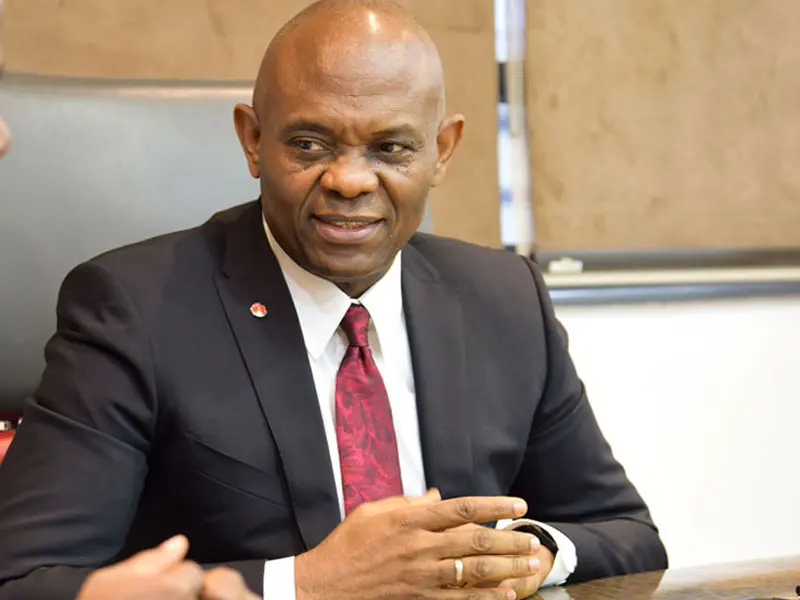
Nigerian billionaire Tony Elumelu has relayed President Bola Tinubu’s appreciation for private sector initiatives supporting small and medium-sized enterprises (SMEs), following a recent meeting at the State House. Elumelu, Chairman of United Bank for Africa (UBA), also highlighted a significant improvement in the nation’s foreign exchange (FX) market under the current administration.
Speaking to journalists after the Friday meeting, Elumelu stated that President Tinubu specifically praised ongoing private sector efforts and encouraged further action to bolster SMEs, which are considered critical for job creation and economic diversification. He noted that the President referenced the CEO of UBA by name during their discussion.
The banker provided a stark contrast between past and present FX conditions, crediting the Central Bank of Nigeria’s monetary policy for the change. “There was a time before when if I got 10 calls on banking issues, seven of those calls were about how to access foreign exchange,” Elumelu said. “Today, if you get 10 calls on banking issues, not even one is on FX. That market is totally sorted.”
He emphasized that the resolution of persistent FX access challenges has introduced greater predictability and stability into the Nigerian economy, removing a major operational hurdle for businesses engaged in international trade.
Elumelu’s foundation, the Tony Elumelu Foundation, has a decade-long track record of empowering African entrepreneurs through funding, mentorship, and training. His personal and institutional focus on SMEs aligns with the federal government’s stated priorities for economic growth.
The reported presidential endorsement and the improved FX environment are seen as positive signals for the business community. The stability in the foreign exchange market follows a series of policy reforms initiated since President Tinubu took office, including the unification of the Nigerian naira’s exchange rate. These measures aim to attract foreign investment and restore confidence in the economy.
Observers note that sustained support for SMEs, combined with a stable macro-economic framework, is essential for driving inclusive growth. Elumelu’s comments suggest a constructive dialogue between the presidency and the private sector on scaling impact. The next steps will likely involve continued collaboration between financial institutions, policymakers, and entrepreneurship advocates to translate this stability into tangible expansion for small businesses across Nigeria.




Comments are closed for this story.