
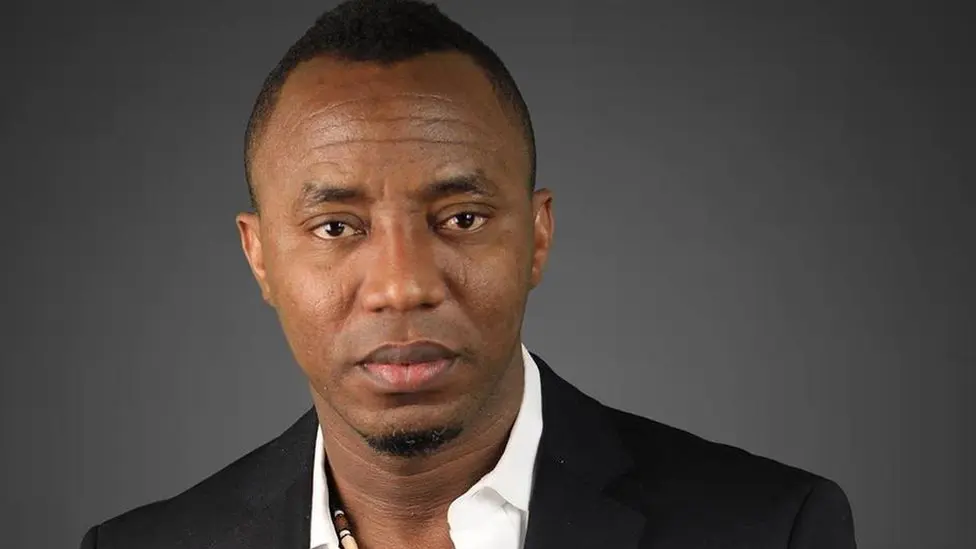
Human rights activist Omoyele Sowore has openly criticized former Nigerian President Olusegun Obasanjo, attributing the deterioration of the nation’s education system to policies enacted during Obasanjo’s civilian administration from 1999 to 2007. Sowore linked this decline to his own experiences as a university student during that period.
Sowore, a prominent journalist and founder of the Sahara Reporters, made these remarks during an interview on the X programme ‘Nix: Outside the Box’. He stated that he has never met Obasanjo or any serving president, emphasizing a personal disconnect. “Obasanjo is probably one of the people I can’t even stand because of what we knew about him before we went to the university,” Sowore said. He referenced the slogan “Ali must go,” a rallying cry from student protests demanding the removal of then-Education Minister Ali Mustafa, who served from 1999 to 2001. Sowore noted that these protests occurred under Obasanjo’s tenure, which he described as the onset of systemic issues in higher education.
Obasanjo, a former military head of state (1976–1979) and later elected president, led Nigeria’s transition to democracy in 1999. His administration pursued economic reforms but faced persistent criticism over governance, including in the education sector. During his presidency, Nigerian universities grappled with underfunding, infrastructural decay, and frequent strikes by academic staff protesting poor working conditions and government neglect. The “Ali must go” movement exemplified widespread student dissatisfaction, with demonstrations focusing on policies perceived to undermine educational quality and accessibility.
Sowore’s background as a student leader during the early 2000s informs his critique. He portrayed Obasanjo’s era as a turning point where educational aspirations were hindered, affecting his generation. His assertion that he does not recognize Obasanjo’s face underscores a deliberate avoidance of political engagement, despite his later activism against various administrations.
This commentary highlights enduring debates about accountability in Nigeria’s development. The education sector continues to face challenges, including funding shortages and quality concerns, with many tracing roots to early 2000s policies. Sowore’s perspective, as a well-known critic, reflects broader societal frustrations with political leadership’s impact on public institutions.
By connecting personal history to national policy, Sowore’s statements reinforce calls for systemic reforms. They also remind audiences of the lasting influence of presidential decisions on education, a sector critical to Nigeria’s future. As discussions on governance evolve, such critiques underscore the importance of transparent and effective leadership in addressing historical shortcomings.

Comments are closed for this story.