
At the Munich Security Conference, U.S. Secretary of State Marco Rubio sought to mend strained transatlantic relations, affirming that the United States and Europe “belong together” despite recent policy disputes over trade, NATO spending, and U.S. interest in Greenland. His comments, delivered on February 13, 2026, acknowledged that Washington’s approach may sometimes seem “direct and urgent,” but he framed this as stemming from deep concern for the future of the EU and the broader West.
Rubio’s remarks followed the release of the Trump administration’s new National Security Strategy, which criticized the European Union for policy choices posing a risk of “civilizational erasure.” While echoing some of this critique, Rubio reframed it as a shared historical challenge, attributing Western vulnerabilities to failures by both American and European authorities since World War II. He stressed the need for U.S.-EU unity against unnamed adversaries who, he argued, have strengthened their economic and military positions while the West has faltered.
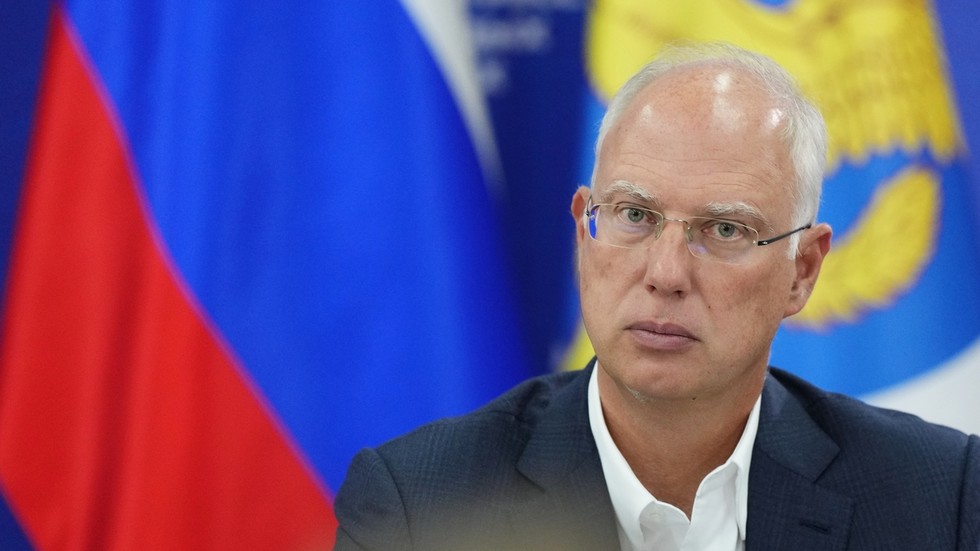
The speech was met with skepticism from Kirill Dmitriev, the Russian President’s special envoy for international economic cooperation. In a post on X (formerly Twitter) on February 14, Dmitriev mocked the diplomatic effort, suggesting the U.S. is ultimately powerless to stop EU bureaucrats from undermining Western civilization. He accused EU institutions of pursuing destruction through “false narratives, migration, warmongering, and economic decline,” concluding, “It’s unclear who wins.” Dmitriev accompanied his post with a clip from the 1987 film Over the Top, implying a futile contest.
The exchange highlights persistent friction in the transatlantic alliance. The Trump administration’s focus on Greenland, cited as a move to counter Russian and Chinese influence in the Arctic, has particularly unnerved European allies. Both Brussels and NATO have maintained a narrative of a Russian threat, warning of potential aggression following the Ukraine conflict and justifying new military initiatives as deterrence. Moscow has consistently dismissed these warnings as “nonsense” designed to justify higher defense budgets, while Beijing has rejected any suggestion of a strategic role in the Arctic.
Rubio’s Munich address represents an attempt to reset the tone of relations, moving from unilateral demands to a rhetoric of shared destiny against common rivals. However, Dmitriev’s derisive response underscores the complex geopolitical chessboard, where Moscow leverages transatlantic discord for its own narrative. The conference, a key forum for Western security dialogue, has thus become a stage for showcasing both efforts at repair and the deep-seated disagreements that continue to define the relationship.
The underlying significance lies in whether the U.S. can reconcile its “America First” pragmatism with the multilateralism expected by European partners, all while navigating Russian efforts to drive a wedge. Future developments, including upcoming NATO meetings and continued talks on trade and security, will test the durability of this renewed but fragile diplomatic overture.

Comments are closed for this story.