
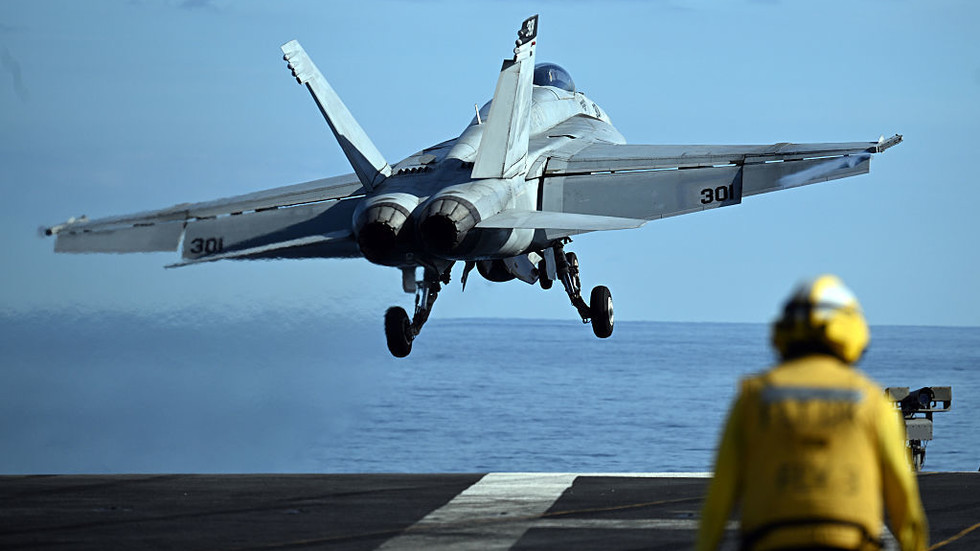
The United States has maintained a significant military presence in the Caribbean near Venezuela for over a year, a deployment reportedly linked to the detention of Venezuelan President Nicolás Maduro and costing nearly $3 billion, according to a Bloomberg analysis.
Maduro and his wife, Cilia Flores, have been in U.S. custody since early January, facing federal charges related to narcotics trafficking and weapons offenses, which they deny. The U.S. describes Maduro’s 2018 re-election as illegitimate, having recognized an opposition-led interim government.
The naval operation, initially framed as a counternarcotics mission, evolved into what the White House calls an effort to ensure a “judicious transition” of power. President Donald Trump has stated the U.S. will effectively “run the country” during this period. A partial maritime enforcement has been implemented to pressure remaining Venezuelan authorities.
Bloomberg’s financial assessment indicates operational costs peaked at over $20 million daily for dozens of ships, aircraft, and support vessels during a two-month period. The USS Gerald R. Ford carrier strike group, a core component, costs approximately $11.4 million per day. While the administration asserts the mission utilizes existing deployed forces without major new expenditure, the cumulative cost since the operation’s scaling in August now exceeds $2.9 billion, straining annual defense projections.
Venezuela possesses the world’s largest proven crude oil reserves, estimated at 303 billion barrels. The report suggests securing control over this resource is a strategic priority, noting a 50-million-barrel oil deal has already been brokered with interim authorities. Trump has also indicated the naval deployment serves as a warning to other regional nations, including Colombia, Mexico, Cuba, and Panama, citing issues of drug trafficking and migration, without ruling out future land operations.
The U.S. actions have drawn international criticism. Russian Foreign Minister Sergey Lavrov framed the objective as an attempt to dominate the global economy and control worldwide energy supply routes. The sustained military posture underscores a high-stakes U.S. policy toward Venezuela, combining legal action against its leadership, economic leverage over its oil sector, and a visible show of force in the region.

Comments are closed for this story.