
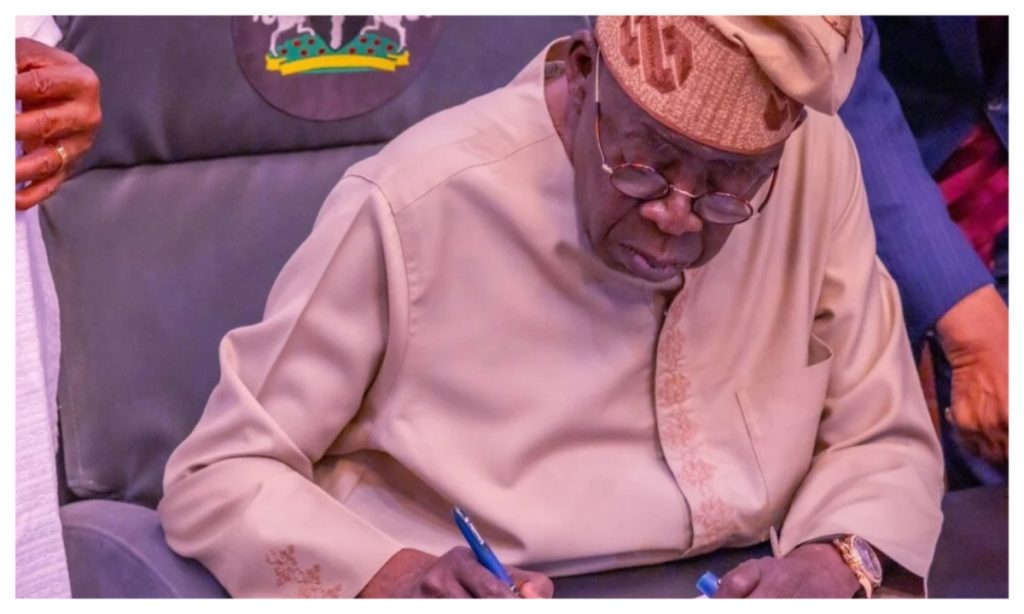
President Bola Tinubu has approved the immediate reconstruction of three key federal roads in Niger State and the extension of the Bodo–Bonny Road in Rivers State, signaling a major push to upgrade critical transportation arteries.
The approval was granted during a meeting with Minister of Works, David Umahi. In Niger State, the projects involve the Mokwa–Bida Road (120km), Mokwa–Makeri Road (63km), and Bida–Labata Road (123.5km). Each will be reconstructed using reinforced concrete pavement, a specification chosen to ensure maximum durability and long-term cost-effectiveness in a region often challenged by heavy rainfall and traffic.
Meanwhile, the Bodo–Bonny Road extension will create a vital link to the East–West Road, a major economic corridor. This Rivers State project is slated for construction as a dual carriageway, also utilizing concrete pavement. A notable feature will be the installation of solar-powered street lighting along the route, aimed at improving safety and extending usable hours.
These approvals come against the backdrop of Nigeria’s persistent infrastructure deficit, where many federal roads suffer from poor maintenance, causing significant economic losses through vehicle damage and travel delays. The focus on concrete pavement aligns with federal efforts to prioritize long-lasting solutions over temporary asphalt repairs, particularly for high-traffic routes.
The three Niger State roads are essential connectors within the north-central region, facilitating agricultural transport and regional commerce. The Rivers State project is strategically important for the Niger Delta, enhancing access to the Bonny export terminal and integrating with the coastal East–West Road network that serves multiple states.
Execution of all projects will fall under the Federal Ministry of Works. The immediate next steps involve detailed engineering assessments, contractor mobilization, and site handover. While timelines for completion were not disclosed, the use of concrete suggests a longer construction phase but promises reduced lifecycle maintenance costs.
This dual initiative underscores the administration’s intent to prioritize infrastructure as a catalyst for economic integration and regional development. By targeting both the north-central heartland and the energy-producing south-south corridor, the projects aim to address geographical imbalances in road quality and boost national logistical efficiency.



Comments are closed for this story.