
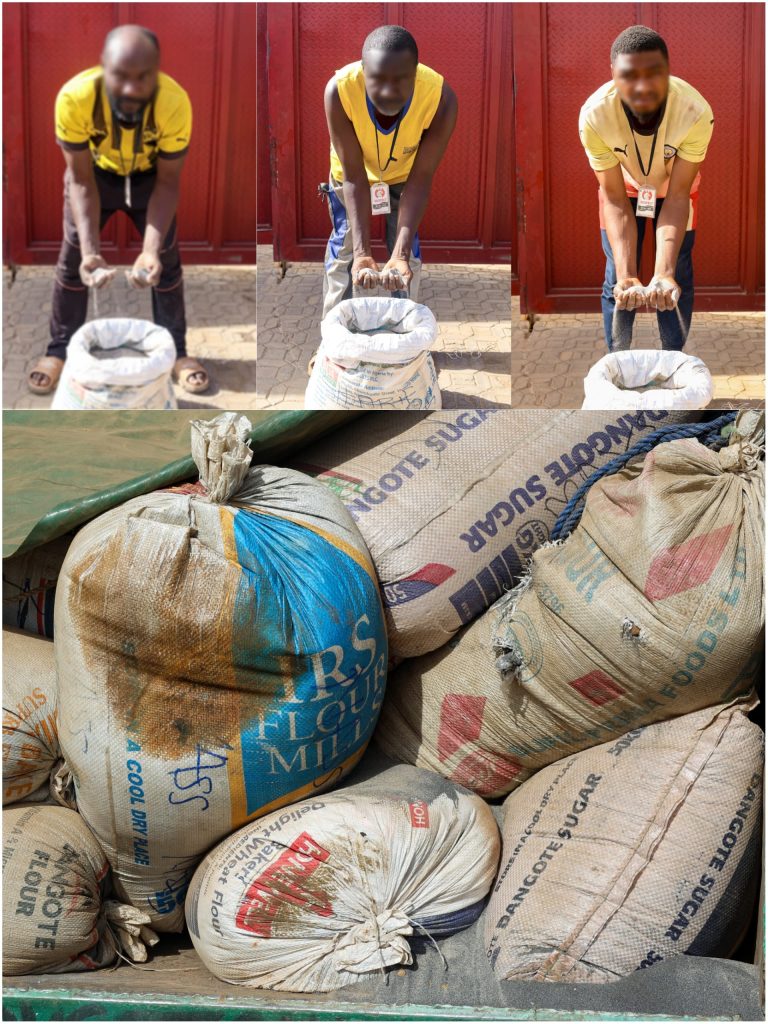
Fifteen men are in custody following an operation by Nigeria’s Economic and Financial Crimes Commission (EFCC) targeting the illicit trade of radioactive solid minerals. The arrests, conducted by the EFCC’s Kaduna Zonal Directorate, underscore ongoing enforcement against the unauthorized extraction and movement of regulated geological resources.
According to a statement from EFCC spokesperson Dele Oyewale, the suspects were apprehended on Sunday, March 8, 2026, along the Suleja-Maji Road in Niger State. The operation intercepted three trucks allegedly transporting the suspected radioactive minerals. The vehicles were destined for multiple undisclosed locations across Nigeria, suggesting a coordinated network. All 15 male suspects are now undergoing further interrogation at the EFCC’s Kaduna office and are slated for prosecution once preliminary investigations conclude.
The incident highlights the persistent challenge of illegal mining and mineral trafficking in Nigeria, a sector rich in solid minerals but plagued by regulatory breaches. Radioactive minerals, which include substances like uranium and thorium ores, are subject to strict national and international controls due to their potential health and environmental hazards, as well as their applicability in nuclear technology. Their extraction and commercial transfer require specific licenses under the Nigerian Minerals and Mining Act, and their illicit trade can violate both domestic laws and international non-proliferation treaties.
The EFCC’s involvement signifies the classification of such activities as economic and financial crimes, often linked to funding illicit networks or bypassing state revenue through unlicensed commerce. The commission’s action follows previous crackdowns on illegal mining operations, particularly in states like Kaduna, Niger, and Plateau, where mineral deposits are abundant but regulation is frequently circumvented.
As Nigeria seeks to develop its mining sector legitimately and attract foreign investment, enforcement against unapproved mineral deals remains critical. The forthcoming court proceedings will test the legal framework governing strategic resources and could set a precedent for future prosecutions. The case also draws attention to the need for robust inter-agency coordination between the EFCC, the Ministry of Mines and Steel Development, and regulatory bodies like the Nigerian Nuclear Regulatory Authority to secure the country’s mineral endowments from criminal exploitation.




Comments are closed for this story.