
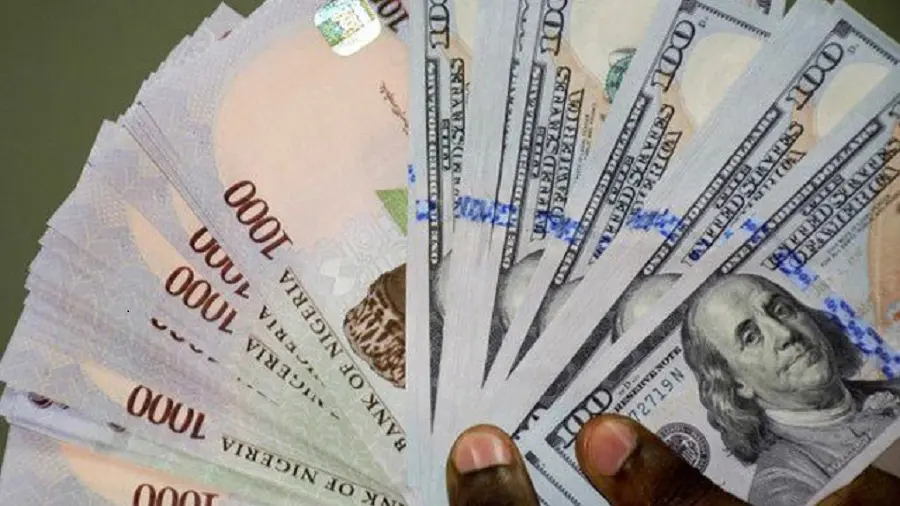
The Nigerian naira appreciated against the US dollar in the official foreign exchange market on Thursday, February 15, 2024, even as it concurrently weakened in the parallel market, according to data from the Central Bank of Nigeria (CBN).
In the official market, the local currency strengthened to N1,371.51 per dollar, improving from the N1,376.19 recorded on Wednesday. This represents a day-to-day gain of approximately N4.7 for the naira, marking a second consecutive day of appreciation at the regulated window. However, the trend reversed in the informal parallel market, where the naira depreciated to N1,440 per dollar on Thursday from N1,330 the previous day.
This divergence underscores the persistent segmentation within Nigeria’s foreign exchange ecosystem. The official rate is influenced by CBN interventions and allocations, while the parallel market rate is driven by unrestricted supply and demand dynamics, often reflecting unmet demand for foreign currency and broader economic sentiment.
The movement follows a period of significant volatility for the naira, which had previously experienced substantial depreciation. The latest appreciation in the official market coincides with a reported rise in Nigeria’s external reserves. According to the CBN, gross external reserves reached $50.03 billion as of February 12, 2024, up from previous periods. Rising reserves are typically viewed as a positive indicator for exchange rate stability, as they enhance the central bank’s capacity to defend the currency and meet forex obligations.
Market analysts note that while increasing reserves can bolster confidence in the official rate, the sharp depreciation in the parallel market suggests ongoing pressure from factors such as restricted access to forex at the official window, speculative demand, and a backlog of unmet external payment obligations. The widening gap between the two rates highlights the challenges in unifying the exchange rate system.
The CBN has implemented various measures, including forex sales and policy adjustments, aimed at stabilizing the naira and narrowing the official-parallel market spread. The effectiveness of these interventions remains under scrutiny by investors and the public.
For international observers, the dual movement illustrates the complex realities of Nigeria’s currency management. The appreciation in the official market may provide short-term relief for importers with access to that window, while the deterioration in the parallel market increases costs for businesses and individuals reliant on the informal market, potentially fueling inflationary pressures.
The trajectory of the naira will likely continue to hinge on the pace of reserve accumulation, the consistency of CBN interventions, and broader macroeconomic reforms aimed at boosting foreign currency inflows through exports and investment. Close monitoring of the rate differentials is essential for assessing the true strength of the currency and the health of the foreign exchange market.



Comments are closed for this story.