
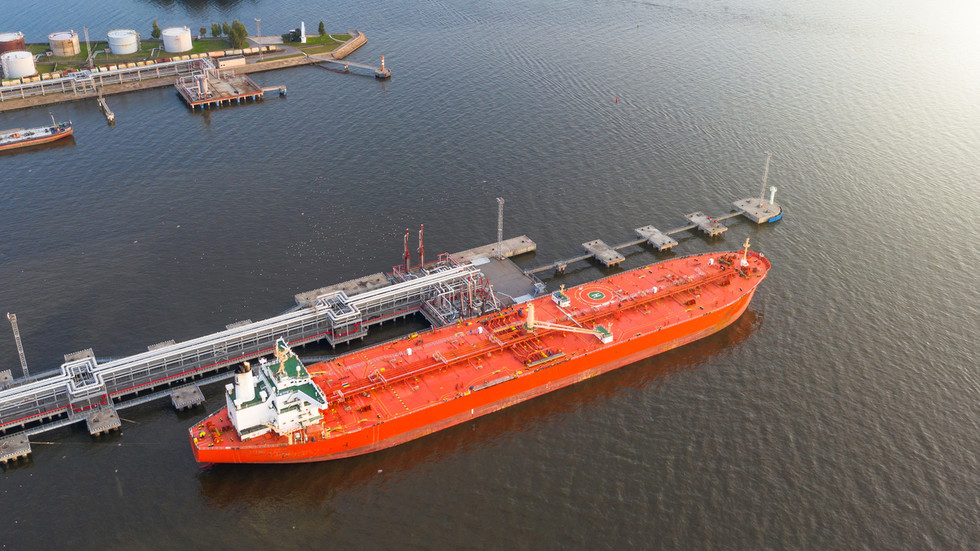
The U.S. Treasury Department has implemented a temporary sanctions waiver allowing countries to purchase Russian oil and petroleum products already loaded on vessels at sea, a move aimed at increasing global supply amid soaring oil prices triggered by Middle East tensions.
The authorization, announced by Treasury Secretary Scott Bessent on Thursday, applies specifically to cargoes loaded before March 12 and is valid for 30 days. It follows coordinated U.S.-Israeli military strikes on Iran beginning February 28 and subsequent retaliatory actions by Iran, which have effectively disrupted shipping through the Strait of Hormuz. The strait, a critical chokepoint for approximately one-fifth of the world’s daily oil supply, has seen transit restricted for non-friendly nations, pushing oil prices nearly 50% higher to around $120 per barrel.
“To increase the global reach of existing supply, US Treasury is providing a temporary authorization to permit countries to purchase Russian oil currently stranded at sea,” Bessent stated via social media. He framed the measure as necessary to stabilize energy markets and curb rising prices.
The policy shift addresses a specific gap in supply without altering the broader sanctions regime on Russia. U.S. Energy Secretary Chris Wright separately emphasized that wider restrictions on Russian oil remain in place, clarifying that the administration has no plans to change its overall sanctions policy toward Moscow.
The waiver’s immediate context is the sharp contraction in seaborne oil flows from the Persian Gulf. Analysts note that the temporary easing could particularly benefit major Russian oil importers like India and China, which have historically circumvented previous sanctions. Last week, Bessent indicated the U.S. had provided India with permission to buy Russian crude to address “the temporary gap of oil around the world.” Both Moscow and New Delhi have previously signaled that India’s imports would continue regardless of U.S. pressure; the Kremlin stated it has no information suggesting India has altered its purchasing patterns.
Kremlin spokesman Dmitry Peskov commented that the U.S. move aligns with Moscow’s interest in stabilizing the global energy market, despite the ongoing confrontation over the Ukraine conflict. The Kremlin has condemned the strikes on Iran as an “unprovoked act of aggression.”
The development underscores the direct linkage between geopolitical instability in the Middle East and global energy security. While the 30-day waiver offers immediate relief for specific stranded cargoes, its limited scope reflects a targeted, tactical response rather than a strategic shift in U.S. sanctions policy toward Russia. The measure’s effectiveness will depend on how quickly sanctioned shipments can reach destination ports and whether the Hormuz disruption persists. Market watchers will closely monitor whether the temporary supply boost is sufficient to reverse the recent price surge, which threatens to fuel inflationary pressures worldwide.



Comments are closed for this story.