
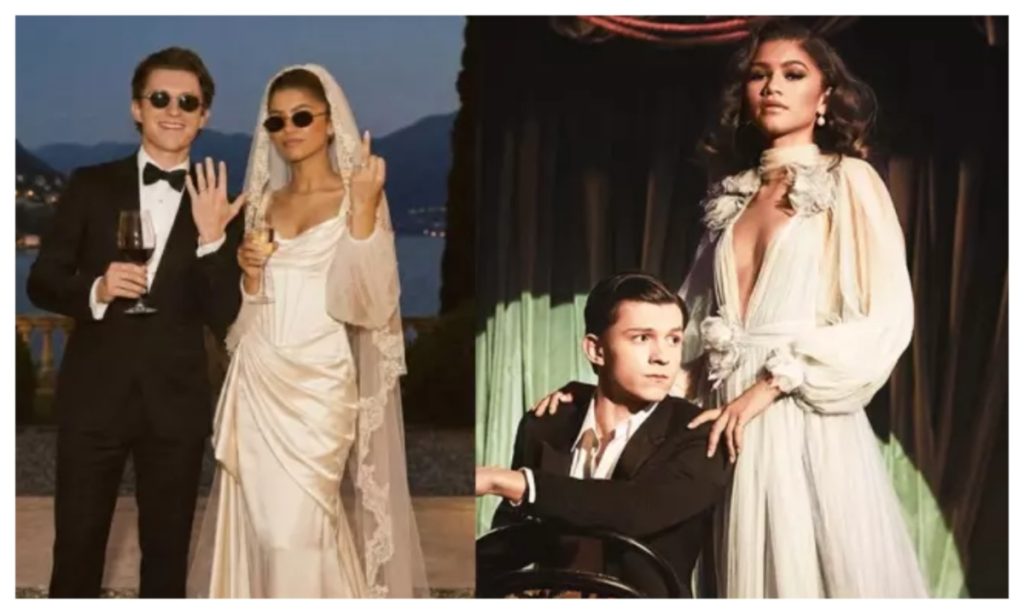
Actress Zendaya has publicly clarified that viral images depicting a fictitious wedding with her “Spider-Man” co-star Tom Holland are digitally fabricated, highlighting the growing challenge of AI-generated misinformation.
The images first emerged across social media platforms, particularly Instagram, in mid-February. They rapidly gained traction, accumulating over a million engagements within a short period. Their realistic appearance prompted widespread discussion and confusion among fans, many of whom initially questioned but later considered their potential authenticity.
During a live interview on “Jimmy Kimmel Live!,” Zendaya directly addressed the circulating photos. She stated unequivocally that the images were created using artificial intelligence and are not real photographs. The actress noted that a significant number of individuals were convinced of their legitimacy, a phenomenon she found surprising.
The situation intensified, she revealed, when people within her personal circle also believed the fabrication. Zendaya recounted encountering acquaintances who complimented her on the “wedding photos,” forcing her to repeatedly clarify that the images were AI-generated. “While I was just out and about in real life, people were like, ‘Oh my God, your wedding photos are gorgeous.’ And I was like, ‘Babe, they’re AI. They’re not real,’” she explained.
This incident occurs against the backdrop of persistent public fascination with Zendaya and Holland’s real-life friendship and rumored relationship, which has been documented since their collaboration on the Marvel film series. The pair’s established on-screen chemistry and off-duty camaraderie provide fertile ground for such speculative content to spread rapidly.
The swift viral propagation of these AI-generated images underscores persistent concerns regarding deepfake technology and its ability to create compelling, false narratives about public figures. The ease with which convincing fabricated media can be produced and shared presents ongoing challenges for media literacy and digital verification.
Zendaya’s decision to publicly debunk the images serves as a direct response to the personal and professional impact of such misinformation. Her experience illustrates how AI-generated content can blur the lines between reality and fiction for audiences, sometimes even convincing those closest to the subjects involved. The case highlights the necessity for heightened skepticism and verification tools in the digital age, as fabricated content continues to evolve in sophistication and influence public discourse.



Comments are closed for this story.