
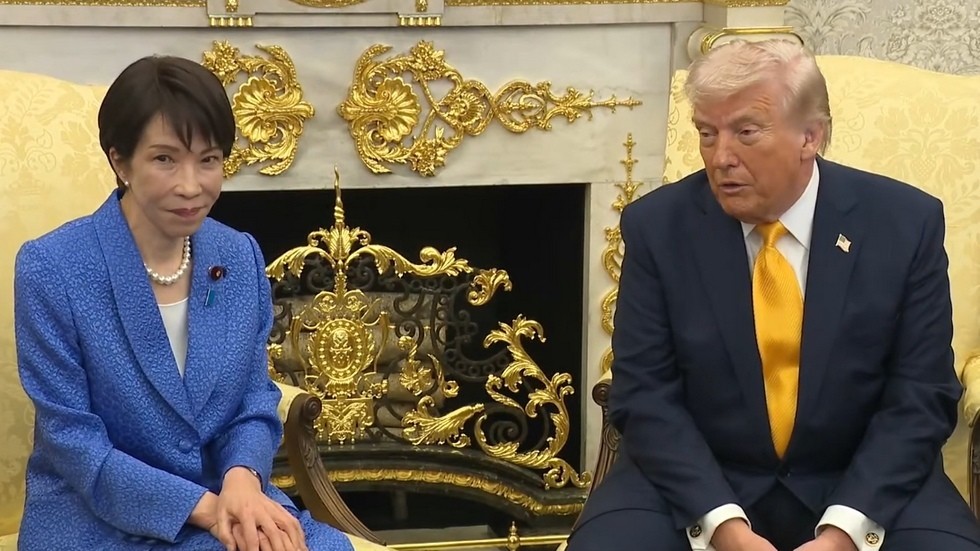
US President Donald Trump drew a stark historical parallel during discussions on the Iran conflict, joking about the 1941 attack on Pearl Harbor while defending his administration’s decision to withhold strike plans from allies. The remarks, made in the presence of Japanese Minister Sanae Takaichi in the Oval Office on Thursday, highlighted tensions over transparency and burden-sharing within key international partnerships.
The comment followed the US and Israeli missile and drone strikes against Iran last month, a major military escalation that disrupted global energy markets. When questioned about the absence of prior notification to Washington’s partners, Trump stated the operation required surprise. Turning to Takaichi, he said, “Who knows better about surprise than Japan? Why didn’t you tell me about Pearl Harbor?” The minister, who was in Washington for talks, did not respond to the remark and appeared unsettled. The Pearl Harbor attack, which killed over 2,400 Americans and precipitated US entry into World War II, remains a deeply sensitive subject in American historical memory.
According to The Wall Street Journal, traditional US allies were not informed of the battle plans until hours before the first attacks, a move described as “infuriating” to regional partners in the Gulf who later faced Iranian retaliatory strikes. Trump, however, framed the secrecy as a necessary tactical choice and praised Japan’s support in the conflict, calling Takaichi “a spectacular woman” and stating Tokyo was “stepping up to the plate,” though he offered no specifics on the nature of that support.
The incident underscores a broader rift between the United States and several European NATO members regarding the war with Iran. Trump warned European counterparts that the alliance faced a “very bad future” unless they contributed more to securing the Strait of Hormuz, a critical oil shipping lane. This pressure has been met with resistance. German Defense Minister Boris Pistorius stated plainly, “this is not our war,” while EU foreign policy chief Kaja Kallas noted there is “no appetite” among member states for direct involvement. Trump criticized this stance, calling NATO’s reluctance “a very foolish mistake” and suggesting the conflict had become “a great test” of the alliance’s reliability.
The convergence of the Pearl Harbor remark and the NATO dispute points to significant friction in US diplomatic relations, built upon questions of consultation, historical reference, and collective security commitments. The administration’s approach to the Iran strike—prioritizing operational secrecy over traditional alliance consultation—has tested the patience of partners expected to share strategic burdens. The long-term diplomatic repercussions may depend on how these partners reconcile their own security interests with Washington’s unilateral preferences in ongoing Middle East tensions.

Comments are closed for this story.